

This snorkeling tour glossary explains the terms cruise passengers hear in Cozumel, from drift and sandbar to ship time, before they step on the boat.
Every snorkeling tour in Cozumel starts with a briefing, and every briefing is full of words that regulars nod along to and first-timers quietly wonder about. Drift. Wall. Sandbar. Platform. Ship time. None of them are hard, but hearing them for the first time while the boat is already moving is not the moment to learn. This glossary walks through the vocabulary you will hear on a snorkeling tour Cozumel guides run every day, grouped the way the day unfolds, so the briefing sounds like a plan rather than a foreign language.
Read it on the ship the night before. It takes ten minutes, and it turns a lot of small uncertainties into one relaxed morning.
What do guides mean by a drift snorkeling tour?
The single most important word in Cozumel snorkeling is drift. The island sits in a current that runs along its west coast from south to north, and most reef snorkeling here works with that current rather than against it. The boat drops you at the upwind end of a reef, you float along with the water doing most of the work, and the boat follows and collects you at the other end.
A few related terms come with it:
- Entry: how you get in. Most snorkel boats use a seated slide from the side or a step off the back. Nobody expects a dive.
- Live boat: the boat does not anchor. It stays mobile and tracks the group, which is why the crew asks you to stay together and to keep your head up every so often.
- Pickup: the end of the drift, where you tread water or float and the boat comes to you. You do not swim back to where you started.
- Surface interval: the rest on the boat between stops, used to move to the next site, drink water and warm up.
The practical upshot of a drift snorkel is that you do very little swimming. Kicking against the current is the classic beginner's mistake, and the guide will say so in the briefing. Float, look down, and let the island come to you.
What is the difference between a reef stop and a sandbar stop?
Most snorkeling tours out of the cruise piers combine two kinds of site, and the words for them tell you what to expect in the water.
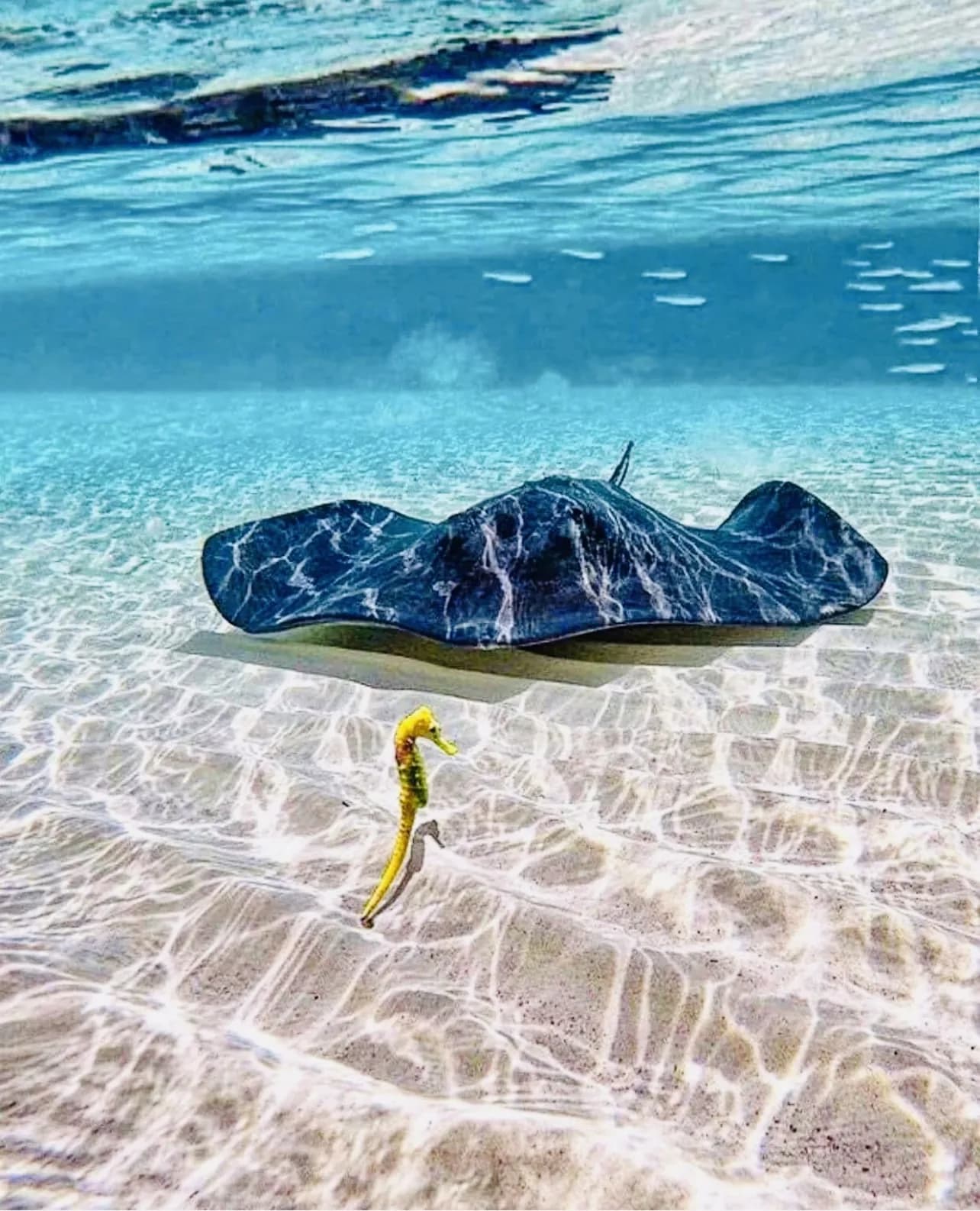
A reef stop is a drift over living coral. Palancar and Colombia are the names you will hear most, both inside the marine park on the island's southwest side. Depth under you varies from a few feet to more than you can see down, and the attraction is structure: coral heads, overhangs and the fish that live in them. A wall is the edge where a reef drops away into deep blue water. You will float above it, not down it, but the view over the edge is one of the great sights of the Caribbean.
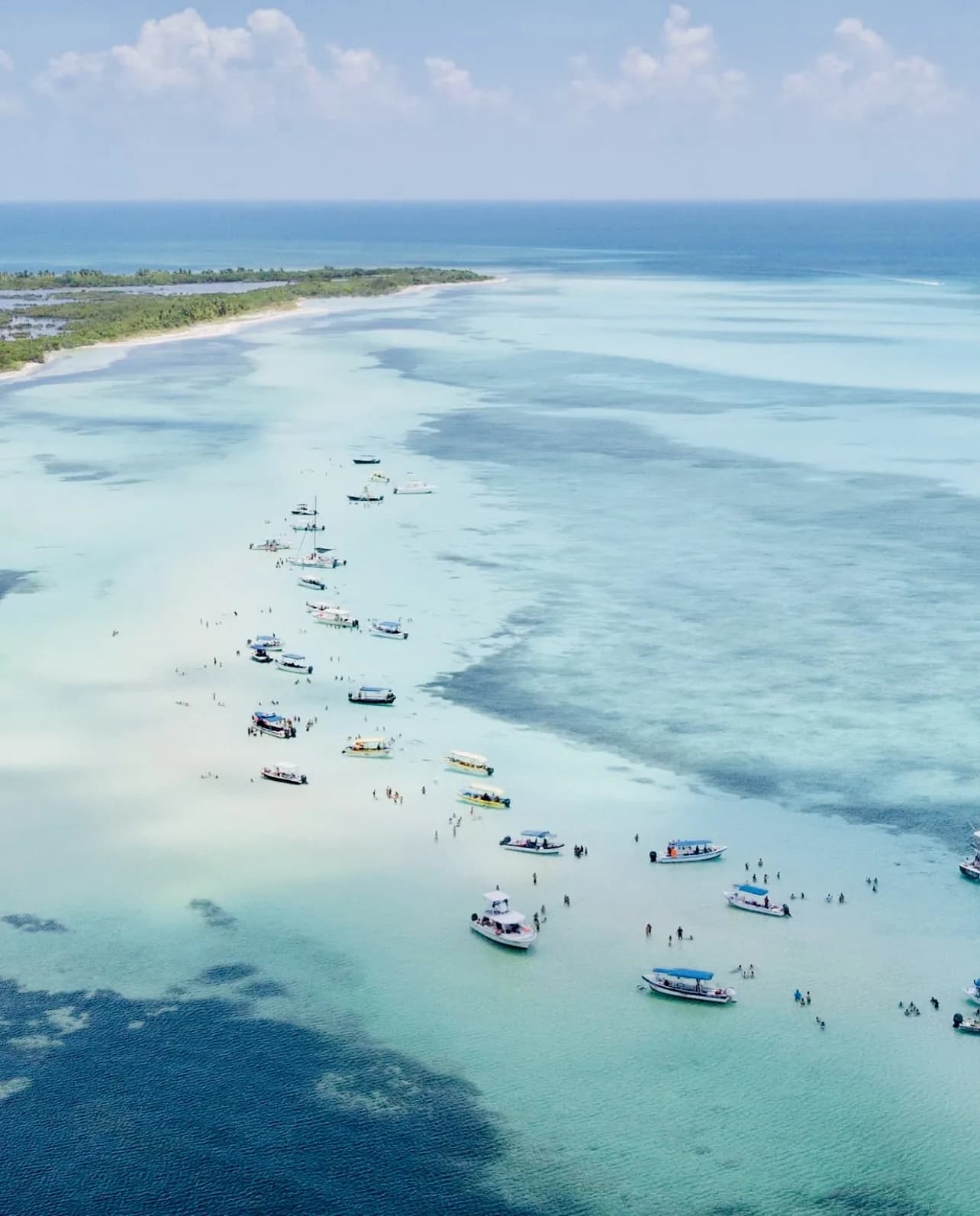
A sandbar stop is the opposite: shallow, calm and bright. The famous one is El Cielo, a bank of white sand in water that is waist to chest deep, known for the starfish that rest on the bottom. Many guides and locals shorten the name to cielo, and it is the stop where people who were nervous at the reef usually relax. The boat anchors here and you can stand.
Two rules come with the sandbar, and the crew will repeat them: do not touch the starfish, and do not lift anything out of the water for a photo. The animals are protected, and the park has become strict about it. You will also hear "no fins" at some sandbar stops, because kicking sand onto the bottom harms the life that lives in it.
Which boat and gear words should you know on a snorkeling tour?
The gear briefing moves fast, so these are the terms worth having in your head before it starts.
- Mask and defog: the crew will offer a defog solution or suggest a little spit rubbed on the inside of the lens and rinsed. It stops the mask from clouding. Let them show you.
- Snorkel with a splash guard or dry top: a valve or hood on the breathing tube that keeps most waves out. Water still gets in sometimes; a sharp exhale clears it.
- Fins: the swimming flippers. Guides often say "fins" rather than "flippers", and may ask you to put them on seated at the edge and to walk backwards if you must walk in them.
- Vest or flotation: an inflatable snorkel vest, or a life jacket on some boats. Wearing one is normal on a shared tour, and many operators require it. It is not a judgment of your swimming.
- Platform and ladder: the swim platform is the low deck at the stern where you get in and out; the ladder hangs from it. The crew will ask you to remove your fins before climbing.
- Dive flag: the red and white flag the boat flies while people are in the water. It tells other boats to keep clear.
- Buddy: the person you keep an eye on in the water. On a shared tour the guide will often pair people up or ask families to stay together.
- Park wristband: the marine park charges a conservation fee for every visitor to its reefs. Many tours include it; some collect it on board. Ask when you book so the morning holds no surprises.
One more phrase: the head count. Before the boat moves after every stop, the crew counts everyone aboard. It can feel slow. It is the single most important thing they do all day, so smile and let them count you.
What does ship time mean for your snorkeling tour?
This is the term that causes the most anxiety and the most missed boats, so it deserves its own section.
Ship time is the clock your cruise ship is running on, which is not always the clock on the island. Cozumel keeps the same time all year and does not change for daylight saving, while many ships stay on the time of their home port or their previous stop. All-aboard times printed in your daily program are in ship time. A tour operator working on local time may be an hour off from your ship without anyone having made a mistake.
Three habits remove the risk:
- When you book, give the operator your all-aboard time and say whether it is ship time or local time. A good operator asks anyway.
- Set your phone to not update automatically, or carry a watch set to ship time.
- Know your pier. Cozumel has three cruise piers, and the drive from a snorkel dock to Punta Langosta downtown is different from the drive to Puerta Maya or the International Pier a little way south.
The cozumel cruise port guide on this site covers each pier, how to tell which one your ship uses, and how far the main snorkel departures are from each. If the briefing includes a return time, convert it to ship time in your head before you get in the water, and you will spend the drift looking at fish instead of doing arithmetic.
Two other time words: departure is when the boat leaves the dock, not when you should arrive, so be early. Return is when the boat is back at its dock, and you still need to get from there to your pier.
Which snorkeling tour words describe conditions and rules?
The last set of terms covers weather, water and the marine park, and they are the ones most likely to change your day.
A norte is a north wind that blows through the Mexican Caribbean in the cooler months. When one arrives, the harbour master can close the port to small boats, and snorkel tours stop running until it passes. Operators watch the forecast and will tell you the night before if the morning looks doubtful. If you hear "the port is closed", it means the authority has made the decision, not the tour company.
Visibility is how far you can see underwater, and Cozumel's is among the best anywhere because the current carries silt away. Chop is the small surface waves that make getting on and off the boat lumpy; it has little to do with what you see once your face is in the water. Swell is the longer, slower rise and fall that can bring on seasickness, and the crew will tell you to look at the horizon, not the deck.
Marine park rules come up in every briefing, and the vocabulary is simple:
- No-touch: hands off coral, starfish, turtles and everything else. Coral is an animal, and a brush of a hand or a fin can kill a patch that took decades to grow.
- Reef-safe or biodegradable sunscreen: the only kind permitted in the park. Many operators ask you to skip sunscreen altogether on the boat and wear a rash guard instead.
- No feeding: fish are not fed on tours inside the park.
- No standing on coral: at reef stops, you float; the only place you stand is sand.
When a guide uses these words, they are not being fussy. The reefs are the reason the tour exists, and the rules are what keep them worth visiting.
Learning the language of a snorkeling tour is the easiest preparation you can do, and it is the one most people skip. With the vocabulary in hand, the briefing becomes confirmation of a plan you already understand, and your attention goes where it belongs: the reef. When you are ready to put the words to use, the team at Cozumel cruise excursions runs small-group and private snorkeling tours built around cruise schedules, and they are happy to answer any term this glossary left out.