

A cenote swim fits a Cozumel cruise day when you plan the clock from pier to pool and back, and this guide shows how to do it without rushing.
A cenote swim is the one Cozumel excursion that people talk themselves out of for the wrong reason. They assume a freshwater cave pool in the jungle must be too far from the pier for a ship day. It is not, as long as you plan the day from the pier outward rather than from the pool inward. This guide covers the clock: how a cenote swim fits between gangway and all-aboard, where the time actually goes, and what changes depending on which pier your ship uses. For the geology, the history and what the water feels like, the complete guide linked above has you covered.
The short version is that the swim itself is the smallest slice of the day. Getting there, getting ready and getting back are what you are really scheduling. Plan those three well and the swim takes care of itself.
Can you do a cenote swim on a Cozumel cruise day?
Yes, with one important distinction. The cenotes most people have seen in photographs are on the mainland, strung along the highway between Cancun and Tulum. Reaching those from Cozumel means a ferry crossing to Playa del Carmen, a road transfer, the cenote, and the same journey in reverse, all before the ship's all-aboard. On a normal port call that is a gamble with the one deadline you cannot miss.
Cozumel has its own answer. The island is limestone, like the mainland, and the rain that falls on it drains underground into caverns and pools. The best known is Jade Cavern, a cenote in the interior reached by unpaved jungle road. Tours there leave from the cruise piers, do not involve a ferry, and are built around ship schedules. It is smaller and quieter than the mainland showpieces, which many visitors come to see as the point.
So the honest answer to the question is: a mainland cenote is a stretch on a cruise day, and an island cenote is a comfortable fit. The rest of this article assumes the island.
How long does a cenote swim take from pier to pool and back?
Operators quote a total tour length, and that number is the one to hold onto. What first-timers underestimate is how that time divides up, so here is the day in its pieces.
- Pier exit. Walking off the ship, clearing the terminal shops and finding your meeting point takes longer than it looks on the map. Allow for a slow gangway if several ships are in.
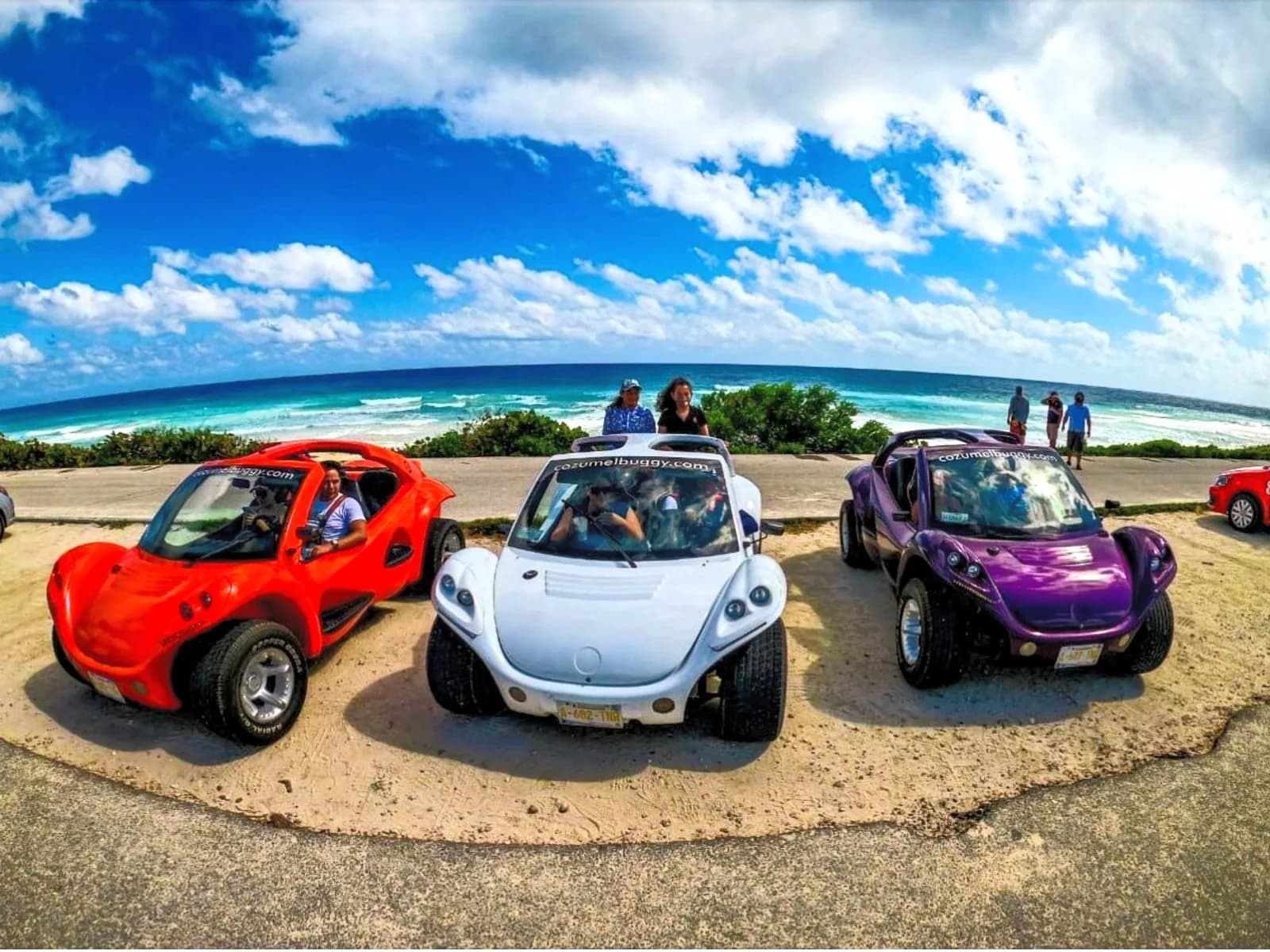
- The drive. Paved road out of town, then a stretch of dirt track through the jungle. The track is the part that makes a jeep or ATV tour fun and makes a van tour bumpy. Either way it is a fixed cost that you cannot hurry.
- Arrival and briefing. A walk from the parking area to the cenote mouth, the safety talk, the rinse-off and the life jacket fitting. Rushing this part is where accidents happen, and guides do not rush it.
- The swim. Often the shortest block of the day. Fresh cenote water is cool and the light inside is dim, and most people are content after a good soak and some floating rather than wanting an hour.
- Drying, changing and the return. The same drive back, then the gap between where the tour drops you and where your ship is tied up.
When you compare tours, ask for the pier-to-pier total, not the "time at the cenote". Then subtract that total from your all-aboard time and see what buffer is left. A good operator will do this arithmetic with you when you book and will tell you plainly if your ship's hours make the day tight.
Which pier are you leaving from, and why does it change the plan?
Cozumel has three cruise piers, and the cenote lies inland from all of them, so the difference is not huge. It is still real, because the pier decides where the tour collects you and where it must have you back.
Punta Langosta sits in downtown San Miguel, which means a short walk to shops and a slightly longer drive out of town traffic. The International Pier and Puerta Maya sit side by side a little way south, with their own terminal complexes. If your ship uses Puerta Maya, the cozumel cruise port guide for that terminal explains the layout, where tour meeting points are and how long it takes to get from the ship to the road.
Two timing details matter more than the pier itself. First, ship time versus island time: Cozumel keeps the same clock all year and does not switch for daylight saving, while many ships run on their home port's time. All-aboard is always in ship time. Tell the operator which clock you are using when you book, and set a watch to it. Second, check whether your ship is tendering or docked. Cozumel ships almost always dock, but on a rare day when they do not, tender queues eat into your morning and your buffer.
If you are unsure which pier you have, your ship's daily program lists it, and the operator will know from your ship name and date.
What happens at the cenote once you arrive?
The pool is the reward, but the sequence before you get in is part of what protects it and you.
You will be asked to rinse off before entering. Sunscreen, insect repellent, lotion and perfume all wash off skin into the water, and in a closed freshwater system they do not disperse the way they would in the sea. Even biodegradable products should be rinsed. Many guides ask you to skip sunscreen entirely for the cenote portion and wear a shirt or rash guard for the drive instead.
Life jackets are common and often required for everyone, whatever their swimming ability. Fresh water is less buoyant than salt water, the pool is deep in places, and the light is low. Floating in a jacket also means you spend your energy looking up at the rock and the roots instead of treading water. Nobody will think less of you for wearing one; nearly everyone does.
A few more things to expect:
- Entry is by steps or a short ladder, not a leap. Jumping from the rim is not allowed unless a guide specifically says a spot is clear and permitted.
- The water is cool. Not cold, but noticeably cooler than the sea, and the first minute takes your breath a little. People warm up quickly once they move.
- The rock formations are off limits to hands. They grew over a very long time and a touch leaves oils that stop them growing.
- Fins are usually not needed and sometimes not permitted, because kicking stirs up silt and clouds the water for everyone.
- Expect wildlife above and around you rather than beneath you. Birds use the cavern mouth, small fish live in the pool, and roots and vines often reach down from the opening. It is a very different scene from a reef.
Bring a dry bag or a plastic bag for your phone, a towel, and a change of clothes. The ride back in wet swimwear on a dirt road is the thing people most often wish they had planned for.
Should you pair a cenote swim with el cielo or a beach?
This is the question people ask once they realise the cenote alone does not fill the day. The answer depends on your ship's hours and on your appetite for a second transition.
The classic Cozumel combination is land in the morning and sea in the afternoon: a jeep or ATV run through the jungle to the cenote, then a reef snorkel or a beach stop on the way back. It works because the cenote is inland and the beaches and reefs are on the coast, so the return drive passes the second activity anyway. On a ship with a long port day, this is the fullest day the island offers.
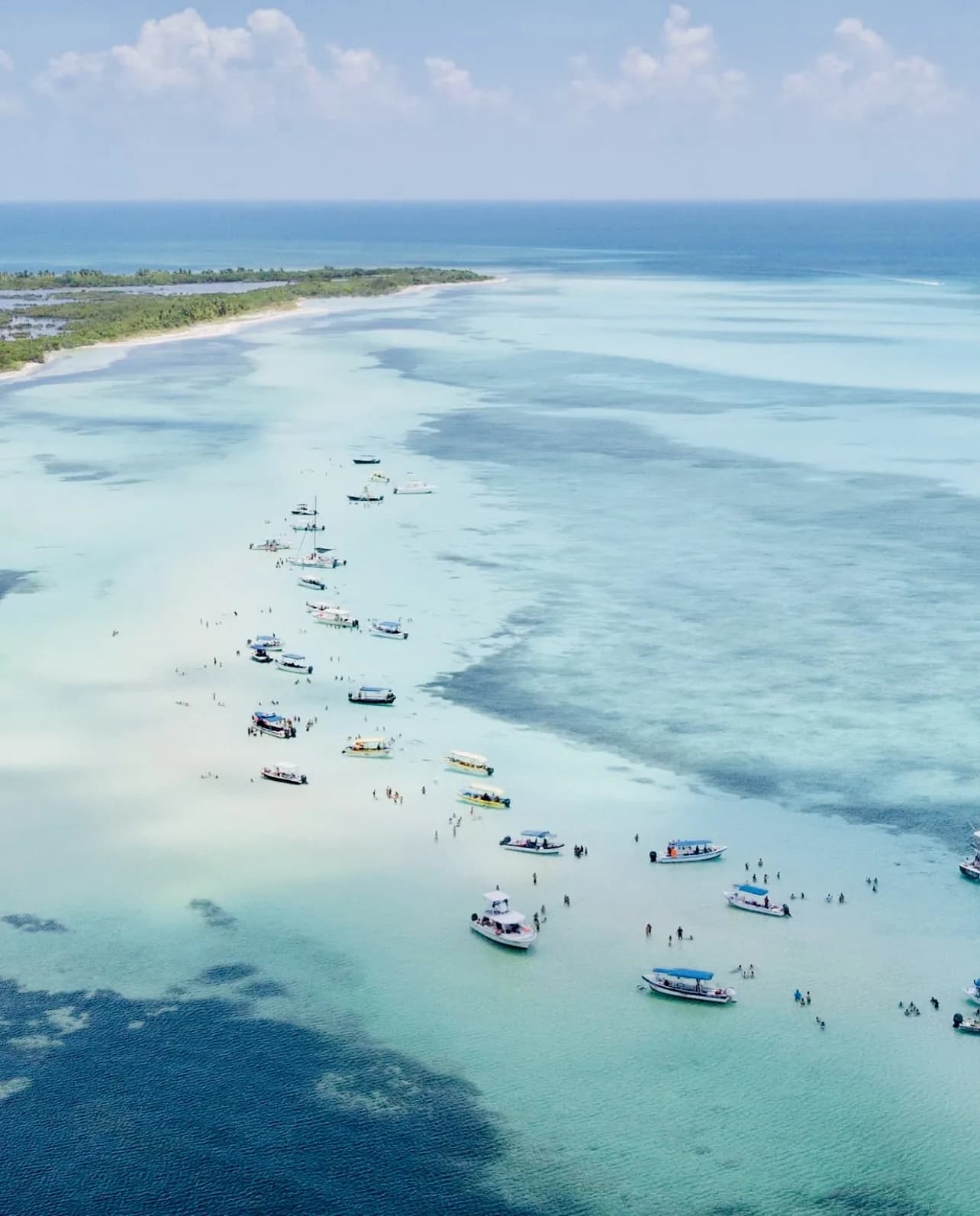
If your hours are shorter, choose. The sandbar at el cielo is a boat trip from the south of the island with shallow, warm, salt water and starfish on the sand, and it fills a half-day beautifully on its own. The cenote is the opposite in every way: enclosed, cool, fresh, quiet. Trying to do both on a short call means two sets of wet clothes, two briefings and no buffer, and the second one is rarely enjoyed as much as it deserves.
A simple rule: if your buffer after the pier-to-pier cenote time is still generous, add the sea. If it is not, pick the one you will remember and leave the other for your next call. Cozumel is on a lot of itineraries, and most cruisers come back.
What else should you decide before you book a cenote swim?
Three small decisions make the day smoother, and all of them happen before you leave home.
First, decide who in your group is actually going in the water. A cenote is not a beach where non-swimmers sit on a lounger. There is shade and a place to wait, but it is a jungle clearing, not a resort. Grandparents and small children often love it; some do not want to get in, and that is fine if they know in advance.
Second, decide how you want to travel. A jeep or ATV tour makes the dirt road part of the adventure and suits people who want to drive. A guided van makes it a transfer and suits people who want to look out the window. Same cenote, different day.
Third, book with the ship schedule in hand. The operator needs your ship name, your date and your all-aboard time in ship time. With those three facts a good operator can tell you exactly whether the day works and how much buffer you will have, and will say no if it does not.
Planned from the pier outward, a cenote swim is one of the most relaxed and most memorable things a cruise passenger can do in Cozumel, and it rarely feels rushed when the clock is handled up front. For tours built around ship schedules from all three piers, with the pier-to-pier timing worked out before you pay, start with the team at Cozumel cruise tours and tell them your ship and your all-aboard time.