

The Cozumel cruise port hosts several ships at once on busy days, which changes how you time your exit, your taxi and your walk back aboard.
Most advice about the Cozumel cruise port quietly assumes your ship is the only one in town. On a genuinely busy day it is not, and every piece of that advice shifts — how long the gangway queue takes, whether there is a taxi waiting, how crowded the sandbar is at eleven in the morning, and how much buffer you need to get back.
Cozumel is one of the busiest cruise destinations in the Caribbean, and on peak-season days the island handles multiple ships simultaneously across three separate piers. If yours is one of four or five, the plan that works on a quiet Tuesday will not hold. Here is what actually changes and how to work around it.
How many ships can the Cozumel cruise port handle at once?
Cozumel has three cruise piers, and this is the structural fact that drives everything else.
Punta Langosta sits downtown in San Miguel, within walking distance of shops and restaurants. The International Pier, also called Terminal Marítima, and Puerta Maya sit adjacent to one another a few kilometres south of town, each with its own shopping terminal.
Each pier can berth more than one ship, which is how the island accommodates several vessels at the same time. That means on a heavy day you may be sharing a single terminal with the passengers of another large ship — and sharing the island with the passengers of several more.
Which pier you are assigned to matters more than most people expect. It determines whether downtown is a five-minute walk or a taxi ride, and it determines how long your return journey takes. Assignments are made by the port and can shift, so it is worth confirming rather than assuming; our overview of the cozumel cruise port breaks down each terminal and what is within reach of it.
Two practical consequences of the three-pier layout are worth holding onto. First, "Cozumel" is not one arrival point — advice about walking to a beach club or a restaurant is only valid relative to a specific pier, and much of what circulates online silently assumes Punta Langosta. Second, a ship tendering or berthing at a different pier from the one on your itinerary is not unusual, particularly on a heavy day when the port is balancing arrivals. Check the daily programme delivered to your cabin the night before and confirm with a crew member in the morning.
How do you find out in advance whether yours is a busy day? Your cruise line's port information rarely says. Cozumel publishes a daily ship schedule, and several third-party trackers republish it, so a search the night before will usually tell you how many vessels are expected and roughly when they arrive. It takes two minutes and it changes the plan.
What actually changes on a multi-ship day?
Six things, in roughly the order you will encounter them.
Disembarkation slows. Thousands of people funnel through a small number of gangways in the same ninety-minute window. If two ships are on the same pier and both clear at the same time, the terminal walkway becomes the bottleneck rather than the gangway.
Taxi queues form. Cozumel's taxi system is well organised, but supply is finite. On a five-ship day the rank at Puerta Maya or the International Pier can back up considerably during the first two hours ashore.
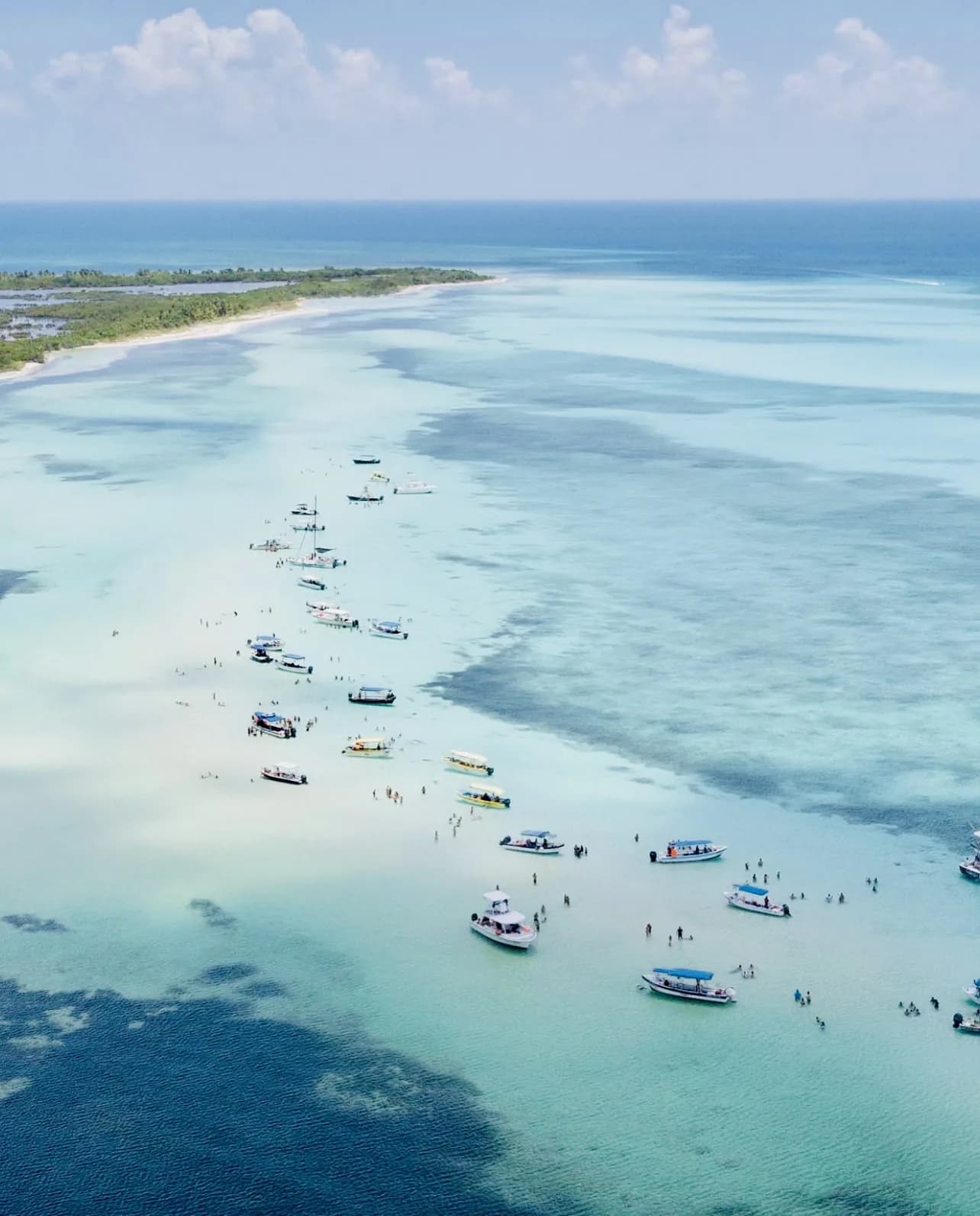
Popular sites crowd in waves. Chankanaab, San Gervasio, the downtown plaza, and the El Cielo sandbar all fill on the same schedule, because every ship's passengers leave at roughly the same time and every tour operator runs roughly the same itinerary.
Independent tours sell out earlier. Operators have a fixed number of boats and guides. On a busy day, walk-up availability is unreliable and the good time slots go first.
Restaurants near the piers back up between noon and two.
The return crush is worse than the morning. Everyone heads back within the same hour, and the taxi flow reverses. This is the one that causes actual problems.
When should you leave the ship?
There are two workable strategies and one that fails.
Go early. Be at the gangway before general disembarkation builds — not because the island opens early, but because you get the first taxis and you reach the water before the third and fourth boats arrive. If your plan involves snorkelling, this is the strategy. Visibility is better in the morning, and the sandbar is genuinely quieter.
Go late. Let the first surge clear, spend the opening hour on a near-empty ship, and go ashore once the queues have dissipated. This works well if your plan is downtown — shops, lunch, the waterfront — because the crowds thin in the afternoon as tours return.
What fails is going mid-surge with no reservation. Leaving forty-five minutes after the ship clears puts you in the longest taxi queue of the day with nothing booked at the other end.
A booked excursion with a designated meeting point sidesteps the taxi question entirely, which is most of its practical value on a busy day. Working out which strategy fits your ship's schedule is what plan your Cozumel day is designed to help with.
How do you avoid the taxi crush?
A few tactics that hold up.
If you are at Punta Langosta, walk. Downtown is right there, and on a crowded day walking past the taxi rank is faster than joining it.
If you are at Puerta Maya or the International Pier and heading downtown, consider walking to the other terminal's rank — they are close together, and queue lengths are rarely equal. Alternatively, walk out to the main road, where flow is often better than at the terminal rank itself.
Agree the fare before you get in. Cozumel taxis operate on zone-based rates rather than meters, and rates are posted at the ranks. Confirming the price up front avoids the most common port-day disagreement. Carry small bills; drivers are not obliged to break large notes, and pesos generally work out better than dollars.
Travelling in a group of four to six is materially cheaper per person than two separate trips, since the fare is typically per vehicle within a zone rather than per head. If you are a family, that is worth knowing before you split up.
Note that ride-hailing apps have historically not operated on Cozumel in the way they do on the mainland. Do not build your return around one.
How much buffer do you need to get back?
More than you think, and this is where multi-ship days bite.
Work from your all-aboard time, which is typically thirty to sixty minutes before the published sailing time — not from the sailing time itself. Then add buffer for the conditions of the day.
On a single-ship day, an hour of margin beyond your tour's stated return is comfortable. On a four- or five-ship day, ninety minutes to two hours is more honest, because the taxi queue back to the pier and the security line at the terminal are both longer than they were in the morning.
Independent operators are not obliged to wait for you, and neither is the ship. Ships do occasionally sail without passengers who are late back from independent excursions. The mitigation is not luck; it is arithmetic plus an operator with a track record of returning people early. Note your pier name and berth before you leave — on a crowded day, "the big white ship" is not a useful description to give a taxi driver.
If you are docked at Puerta Maya, factor in the walk through the shopping terminal, which is long by design and slower when it is full.
Which tours hold up best on a busy port day?
Some excursions absorb crowding and some do not.
Private and small-group trips hold up best. Your departure is not dependent on filling a boat, your guide is not waiting on a coach from another ship, and you can shift the itinerary if a site is packed.
Early-departure snorkel trips work well because they front-run the congestion. The reefs and the sandbar are quietest in the first hours.
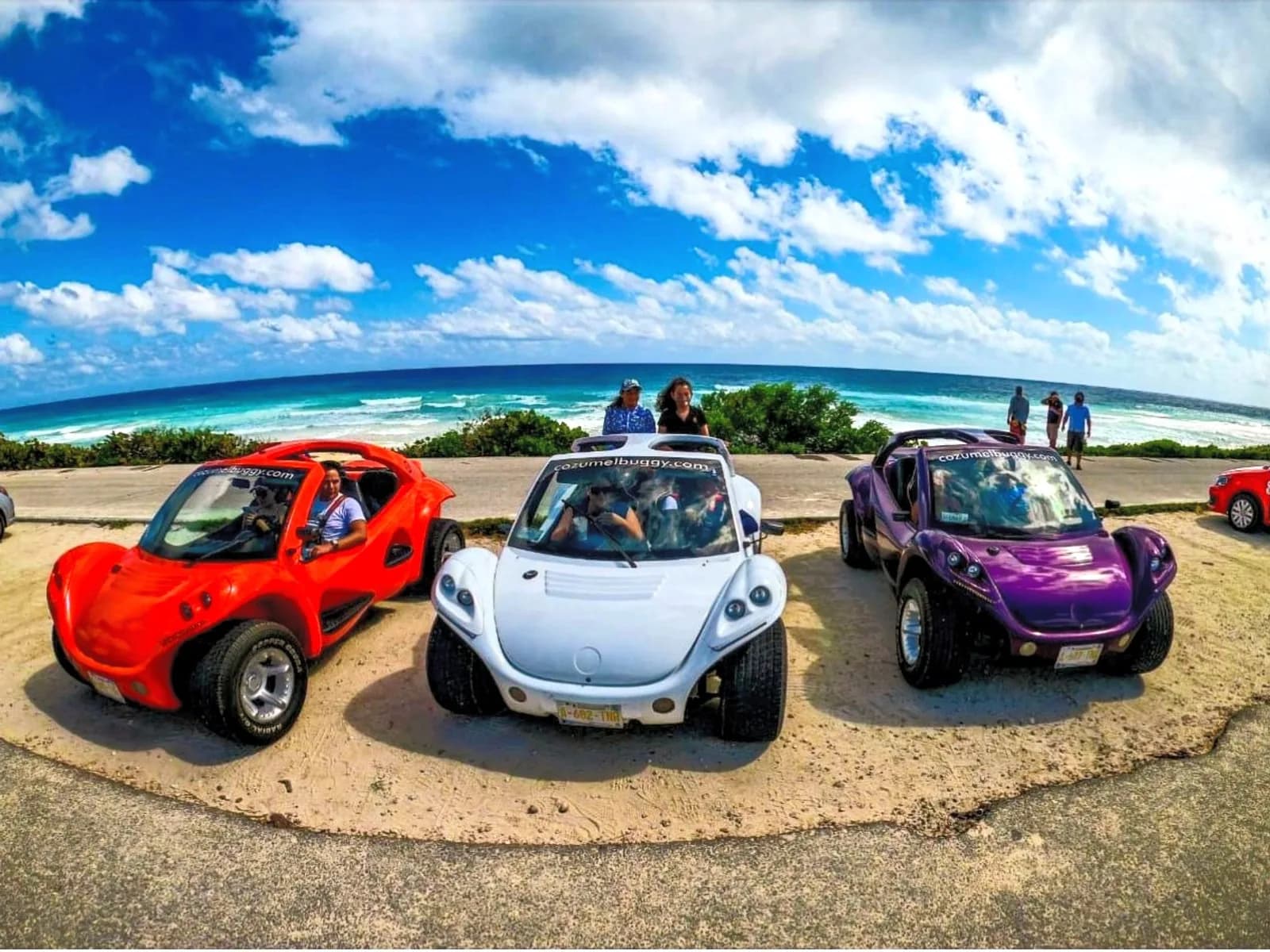
Off-the-beaten-path routes — the east side, the inland ruins, jeep and ATV routes away from the main corridor — barely notice a multi-ship day, because the crowds concentrate along the west coast and downtown.
Large shared coach tours are the most affected. They are the last to load and the last to return, and they arrive at each site alongside every other coach.
Beach clubs and resort day passes are a mixed case. The well-known ones on the west coast fill early on multi-ship days, and a pass does not guarantee a lounger. Smaller clubs further south stay manageable. If a beach day is the plan, reserve rather than walking up.
The pattern is consistent: on a crowded day, pay for control of your own schedule rather than for a bigger boat.
One last piece of arithmetic that applies to every option. If you are choosing between two tours and one returns you to the pier an hour earlier for a similar price, take the earlier one on a busy day. The spare hour is not wasted — it is spent in air conditioning near your ship instead of in a taxi queue watching the clock, and it converts a stressful afternoon into an easy one.
A busy Cozumel cruise port is not a problem to be avoided — it is a variable to plan around, and the planning takes about ten minutes. Check how many ships are scheduled the night before, pick the early or late strategy accordingly, and book your meeting point rather than gambling on a taxi. Browse the Cozumel Cruise Tours excursion lineup to find a departure time that gets you ahead of the surge, and tell us your pier and all-aboard time when you book so we can build the buffer in for you.