NO TOUR, NO FEE! Family Owned & Operated Since 1996 • 3,000+ Five-Star Reviews • TripAdvisor 94/100
The Best-Kept Secret of the Shoulder Season
September through November. Lowest prices of the year, warmest water, improving reef visibility, and Cozumel as the locals actually experience it.
Most travelers skip Cozumel in fall because "hurricane season" sounds alarming. The reality is more nuanced - and for flexible travelers, fall offers conditions and prices that peak season cannot match.
Fall is the deepest discount period of the year. Tour prices, hotel rates, and restaurant tabs all drop 30-50% versus peak season. The same catamaran that costs $95 per person in March often runs $55-65 in October.
September and early October see the fewest cruise ship calls of the entire year. Reef sites that host 200 snorkelers on a March morning might have 20 in October. You experience Cozumel the way locals know it.
Water temperature in fall runs 83-87°F, actually warmer than peak season. The Caribbean retains summer heat through November. You will not need a wetsuit, and the warmth makes long snorkel sessions genuinely pleasant.
October and November deliver some of the best diving and snorkeling visibility of the year - 80 to 100 feet in good conditions. As the hurricane season winds down, calmer seas clear suspended particles and the reefs come alive.
The word "hurricane season" does to Caribbean tourism what the word "rain" does to outdoor event planning - it triggers a blanket cancellation response that often has no relationship to actual conditions on the ground. In Cozumel, the reality is that a typical fall day in October or November looks like this: warm sun through a partly cloudy sky, calm western shore seas perfect for snorkeling, air temperature in the mid-80s Fahrenheit, and a reef occupied by a fraction of the divers and snorkelers it sees in March.
That is not a rare occurrence. It is the most likely fall scenario. The storm risk is real and should be planned around - but planning around it means buying travel insurance and booking refundable tours, not avoiding the island altogether. Travelers who understand the actual risk profile of fall in Cozumel consistently report some of their best Caribbean experiences.
The practical difference fall makes is significant. You will spend less money. You will wait in fewer lines. You will share the reef with fewer boats and divers. You will have real conversations with restaurant owners and shop staff who are not managing 400 cruise passengers simultaneously. And if you visit in late October or early November, you may witness one of the most authentic cultural celebrations in all of Mexico.
Fall in Cozumel spans three distinct phases. Each month has a different risk profile, crowd level, and value proposition.
September is the peak of Atlantic hurricane season and the most volatile month on paper - but context matters here. Cozumel sits in the western Caribbean, and storms that form in the Atlantic tend to track north of the island. In a typical September, you will see more cloudy mornings and afternoon squalls than dramatic storm events. Many operators scale back to weekend departures or run on confirmed weather rather than fixed schedules. If your travel dates are flexible and your only goal is experiencing Cozumel for the absolute lowest cost with the absolute fewest crowds, September delivers. If you need certainty and cannot reschedule, wait for November.
October is the pivot month. The first two weeks still carry shoulder-season uncertainty, with occasional tropical systems and variable rain patterns. By mid-October the shift is palpable: seas settle, skies clear more consistently, and cruise traffic picks back up. Tour operators who reduced schedules in September restore full operations. The reef visibility begins its autumn climb toward the peak 80-100 foot readings that make Cozumel diving world-famous. Downtown San Miguel starts its preparations for Dia de los Muertos, which transforms the island into one of the most authentic cultural experiences available to any visitor to Mexico.
November is the hidden gem of the Cozumel calendar. The dry season begins in earnest, hurricane season is functionally over after the first week, and conditions improve each successive day. Water temperatures hold at a comfortable 83-84°F through the end of the month. Visibility regularly hits 80 feet or better. Cruise ships return to full schedules, which means tour operators are fully staffed and provisioned, but not yet at the frenzied peak-season capacity of March. You get full operations, great conditions, and prices that are still 25-40% below what January and February command. For travelers with schedule flexibility, mid-to-late November is one of the best times to visit Cozumel in the entire year.
For the full month-by-month weather and conditions breakdown covering all 12 months, see our Best Time to Visit Cozumel guide.
Honest information matters more than reassurance. Here is what the data and experience of 30 years of operations actually shows.
Historical context
Cozumel's last major direct hurricane strike was Wilma in October 2005. Before that, the island had not taken a major direct hit in decades. The island lies in the western Caribbean, and the predominant storm tracks in the Atlantic basin tend to curve northward before reaching Cozumel's longitude. This is not a guarantee - it is probability. Plan accordingly.
Cozumel has received one major direct hurricane strike in the past 30 years - Hurricane Wilma in October 2005. The island's position in the western Caribbean means most Atlantic storm tracks pass to the north. The statistical risk of any given September or October date coinciding with a direct strike is low.
The National Hurricane Center issues reliable 5-7 day track forecasts for any developing system. If a storm threatens Cozumel, you will know with enough lead time to cancel, reschedule, or make an informed decision about your travel plans. No one gets surprised by a hurricane in 2026.
When a storm threatens a Caribbean port, cruise lines adjust itineraries and substitute alternative ports. Your cruise is not cancelled - it goes somewhere else. This is largely outside your control and is something to understand before booking a Caribbean cruise during hurricane season regardless of destination.
September and October travelers to any Caribbean destination should carry travel insurance with trip interruption and cancellation coverage. The premium cost is minor compared to the financial exposure of a non-refundable booking. This is standard guidance from every travel professional for hurricane-season travel.
Our No Tour No Fee guarantee covers weather cancellations year-round. If weather prevents your tour from operating on the day of your booking, you pay nothing. This guarantee exists precisely because we want fall travelers to book with confidence rather than skip Cozumel entirely based on an overstated risk perception.
The nuanced truth is that fall in Cozumel operates well the vast majority of the time. Tour operators who have run operations for decades learn to read local conditions, watch developing systems days in advance, and communicate transparently with guests when a change in plans is warranted. The combination of modern forecasting tools and experienced local operators makes fall operations far safer and more reliable than most travelers assume from a distance.
Fall's lower crowds and warm water make several Cozumel experiences better than any other time of year - not worse.
Fall is arguably the finest diving season in Cozumel. Reduced boat traffic means quieter dive sites. From October onward, visibility climbs to 80-100 feet in excellent conditions. The Mesoamerican Reef - the world's second largest coral reef system - runs along Cozumel's western shore. In fall, you share it with far fewer divers than at any other time of year.
View optionsWarm water and fewer boats on the reef make fall snorkeling genuinely exceptional. El Cielo - Cozumel's famous starfish site - is easy to reach and dramatically less crowded than in March. Protected reefs on the western coast stay calm even when weather kicks up on the eastern shore. Morning departures are best for glassy conditions.
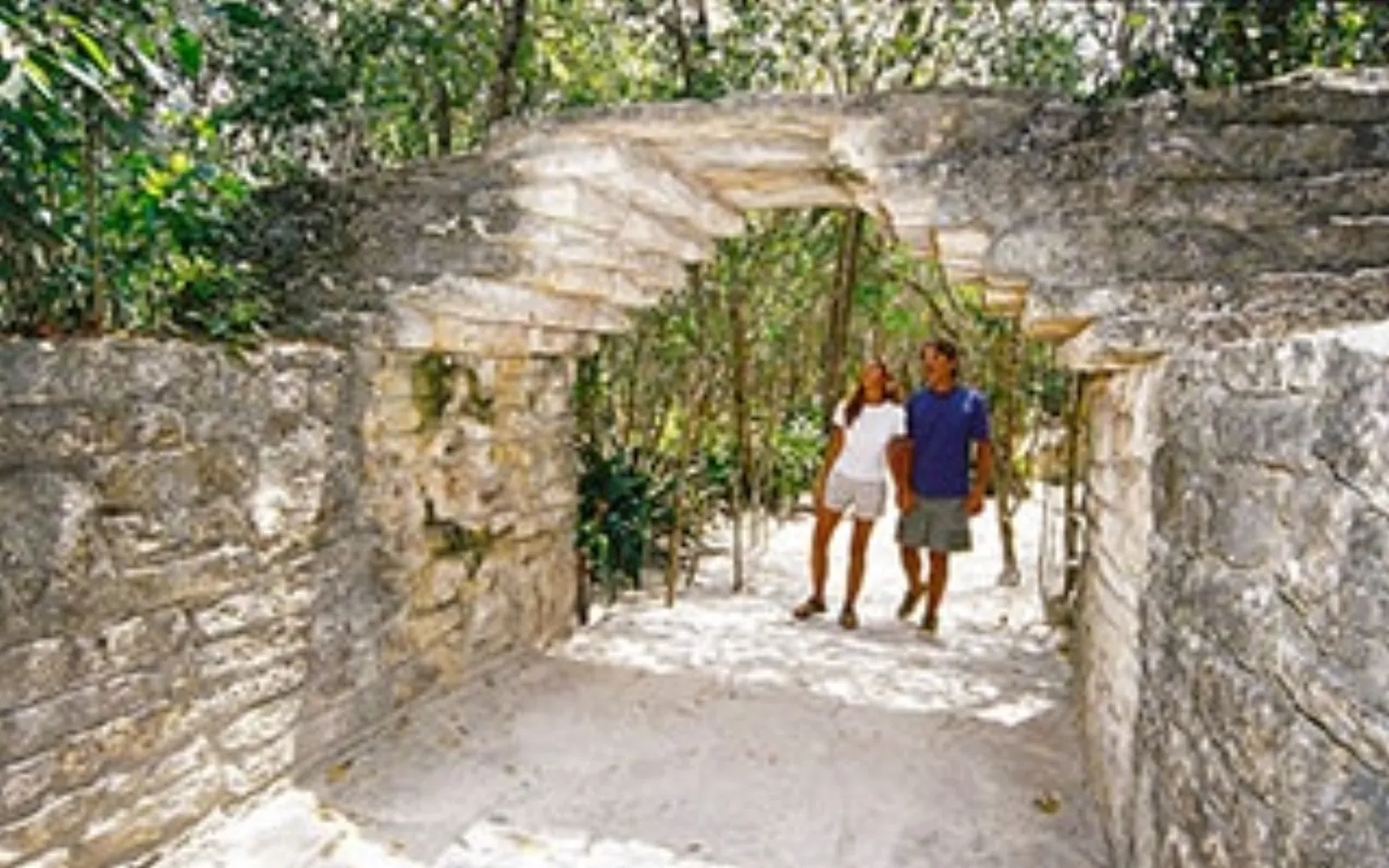
View optionsSan Gervasio is the primary Mayan archaeological site on Cozumel, dedicated to Ixchel, the goddess of fertility and medicine. In fall, with reduced tourist traffic and cooler morning temperatures, a visit here becomes genuinely contemplative rather than a crowded march between rope barriers. Go before 10am to beat the heat and secure the site largely to yourself.
View optionsIn peak season, downtown San Miguel is a funnel of cruise passengers moving between the pier and shopping districts. In fall, the same streets become an authentic Mexican small city going about its business. Local restaurants serve the food their owners actually eat. Shop owners have time to have real conversations. The market square comes alive with locals in the evenings rather than tourists.
View optionsOctober 31 through November 2 brings one of the most profound cultural experiences available to visitors anywhere in Mexico. Cozumel celebrates with genuine community participation - altars built by families, marigold-lined paths leading to the municipal cemetery, sugar skull decorating workshops in the plaza, and evening processions that are moving rather than performative. This is not a tourist attraction. You are witnessing something real.
Dia de los Muertos is not Halloween. It is not a theme park version of death. It is one of the oldest continually practiced cultural traditions in the Americas, a three-day period when families build elaborate altars called ofrendas to welcome the spirits of deceased relatives back to the living world for a brief visit. The ofrendas are layered with marigold flowers - whose scent is believed to guide spirits home - photographs, favorite foods, candles, and objects meaningful to whoever is being honored.
In Cozumel, the celebration is genuine and community-wide. The municipal cemetery is the emotional center of the tradition: families clean and decorate graves beginning on October 31, and by the night of November 1 the paths between headstones are lined with marigold petals and candlelight that extends in every direction. It is visually extraordinary and deeply moving in a way that photographs cannot fully capture.
The downtown plaza in San Miguel hosts public celebrations throughout the three days. These include community altars built by local families and businesses, sugar skull decorating workshops, traditional food stalls serving pan de muerto (bread of the dead) and atole, and evening music. The atmosphere is festive and welcoming to respectful visitors who approach the tradition with genuine curiosity rather than voyeurism.
For travelers who visit Cozumel only during peak cruise season, the island can feel like a beautiful but somewhat curated version of Mexico - the beaches and reefs are extraordinary, but the cultural depth can be harder to access when you are surrounded by thousands of other cruise passengers. Dia de los Muertos changes that completely. You are standing alongside Cozumel families engaging in something they have done for generations. That is the rarest experience travel can offer.
Where to experience it
San Miguel Municipal Cemetery (Cementerio Municipal) and the downtown plaza on Avenida Rafael Melgar. Both are easily walkable from the cruise pier. The cemetery is the more profound experience; plan to visit in the early evening on November 1 when candles are lit and families are present. Dress respectfully and ask before photographing individuals.
The savings are real and significant. Fall pricing reflects lower demand, not lower quality. The reefs, guides, and equipment are the same.
| Category | Peak Season (Dec-Mar) | Fall (Sep-Nov) | Savings |
|---|---|---|---|
| Snorkel Tour (per person) | $85-120 | $55-75 | Up to 38% |
| Catamaran Tour (per person) | $90-130 | $60-85 | Up to 35% |
| ATV/Buggy Tour (per person) | $75-110 | $55-75 | Up to 32% |
| Scuba Diving (2 tank) | $110-150 | $75-100 | Up to 33% |
| Hotel (per night, mid-range) | $180-280 | $90-150 | Up to 46% |
| Restaurant meal (local spot) | $18-28 | $14-22 | Up to 21% |
Prices are approximate ranges based on typical operator pricing. Individual tours may vary. Fall pricing is generally most favorable in September and early October, with November prices beginning to approach shoulder-season levels.
The pricing difference extends beyond tours and hotels. Restaurants in downtown San Miguel that charge tourist-tier prices during March often revert to local pricing in fall when their customer base shifts from cruise passengers to independent travelers and locals. A meal that costs $28 per person in March may cost $16-18 for the same quality in October.
Some operators also reduce group sizes during fall to fill boats with fewer confirmed passengers rather than holding out for full manifests. In practice, this often means a more intimate experience - a catamaran that carries 40 people in peak season might run with 15-20 in October. You pay less and get more space on the water.
Fall travel rewards preparation. These four practices eliminate most of the risk and set you up for a genuinely excellent Cozumel experience.
In September and October specifically, choose tour operators offering full refunds on weather cancellations. We offer our No Tour No Fee guarantee year-round: if weather prevents your tour, you pay nothing. This is the single most important criterion when booking during hurricane season.
Purchase a policy that includes trip interruption, cancellation, and medical evacuation. For September-October travel, this is not optional. The cost is typically 4-8% of your trip value - a minor investment against significant financial exposure.
In fall, weather typically follows a pattern: calm mornings, building clouds by early afternoon, occasional evening showers. Tours that depart at 7:30 or 8:00am consistently get the best conditions. Afternoon tours are more susceptible to afternoon squalls, even in November.
Monitor the National Hurricane Center's tropical weather outlook starting 7 days before your departure. Free apps like Weather Underground and Ventusky provide excellent Caribbean storm tracking. If a named storm is tracking toward Cozumel, your tour operator should contact you. If they do not, contact them.
The best approach to fall booking in Cozumel is layered protection: book refundable tours, carry travel insurance, and monitor the weather starting 10 days before your departure. With those three steps in place, you are as protected as any traveler can reasonably be against weather disruption.
One final note on timing: morning departures throughout fall are consistently more reliable than afternoon slots. Caribbean weather in fall typically follows a diurnal pattern - nights and mornings tend to be calmer than afternoons. A 7:30am snorkel departure will see different conditions than a 1:00pm departure on the same day. For activities that depend on calm water and clear skies, the morning advantage is significant in September and October.
Our No Tour No Fee Guarantee
Every tour we operate carries our No Tour No Fee weather guarantee. If weather prevents your tour from running on your scheduled date, you pay absolutely nothing. No transfer fees, no change fees, no administrative charges. This guarantee applies year-round - including September and October - because we believe fall travelers deserve the same confidence as peak-season travelers.
Full breakdown of storm risk, monthly conditions, and cruise ship protocols during June-November.
Month-by-month comparison of weather, water conditions, crowds, and value across all 12 months.
Guide to Cozumel's primary archaeological site - best visited in fall's cooler morning hours.
Fall pricing means 30-50% off peak rates. Every booking carries our No Tour No Fee weather guarantee. Explore Cozumel when it belongs to the people who love it most.
NO TOUR, NO FEE weather guarantee on every booking