NO TOUR, NO FEE! Family Owned & Operated Since 1996 • 3,000+ Five-Star Reviews • TripAdvisor 94/100
A complete guide to San Gervasio, the Mayan ruins on Cozumel island, plus honest information about mainland options like Tulum and Chichen Itza that cannot be reached on a port day.
Yes, and the answer is more interesting than most cruise passengers expect. Cozumel itself is home to a significant and genuinely underappreciated Mayan archaeological site called San Gervasio, located in the jungle interior of the island about 17 kilometers east of the cruise port. San Gervasio was one of the most important pilgrimage destinations in the entire Mayan world for approximately 600 years, from roughly 800 AD to the arrival of the Spanish in the early 1500s.
The site is dedicated to Ixchel, the Mayan goddess of fertility, medicine, weaving, and the moon. Women from throughout the Yucatan Peninsula, Belize, Guatemala, and even Honduras undertook the journey to Cozumel specifically to visit her temple at San Gervasio. The island’s name in the Mayan language, Cuzamil, means “Island of Swallows,” but its role in ancient Mayan culture was far more than poetic; it was a sacred destination that drew religious pilgrims for centuries.
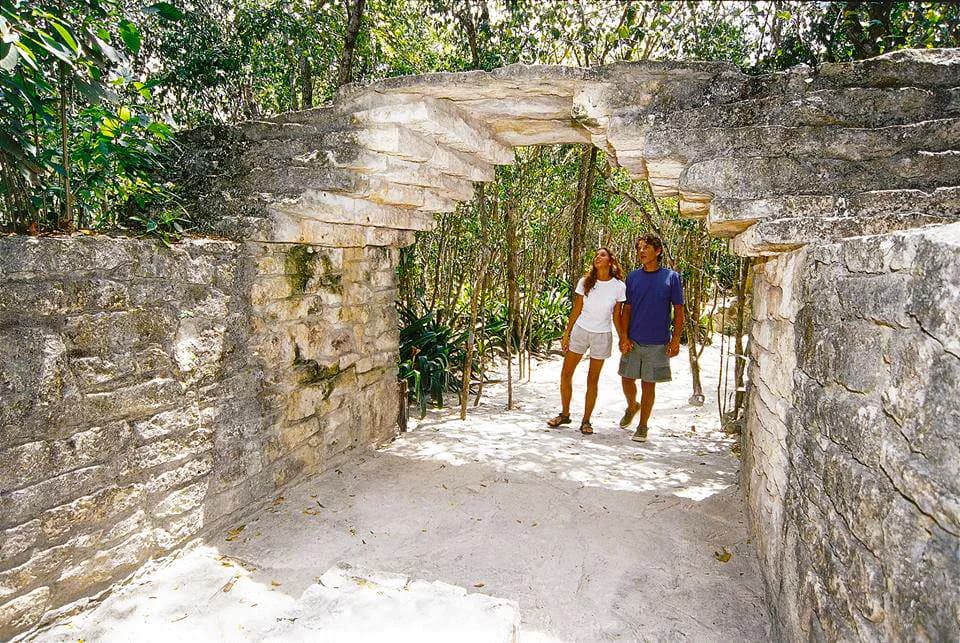
San Gervasio does not have the towering pyramids of Chichen Itza or the cliff-top drama of Tulum. What it offers instead is something rarer: a quiet, largely uncrowded site where you can walk stone sacbeob (Mayan causeways), see multiple intact structures, read detailed bilingual placards, and genuinely understand what this place meant to the people who built it. On busy cruise ship days, having access to a quality archaeological site without large tour groups is an underrated luxury.
Entry Fee
~$12 USD adults, ~$8 children
Hours
8:00am – 5:00pm daily
Time Required
1.5 – 2.5 hours (self-guided)
Distance from Pier
~17 km east across the island
Taxi Cost
$20–25 USD one-way from pier
Best With
Guided tour for full historical context
The site has five main structure groups connected by a loop path. Here is what to look for at each stop.
"The Snail"
A circular observatory platform dedicated to Kukulcan, the feathered serpent deity also worshipped at Chichen Itza. The snail-shell shaped interior is unusual for Maya architecture and served both astronomical and ceremonial functions. It is one of the first structures visitors reach after entering the site.
"The Little Hands"
Named for the small handprints found inside. Las Manitas is one of the most photographed structures at San Gervasio. It is believed to have been a pilgrim waystation along the sacred route to the main Ixchel temple. The handprints are ancient red-painted markings, preserved under a protective canopy.
"Tall House"
The largest and most important structure at San Gervasio, Ka’Na Nah served as the primary temple of Ixchel, the Mayan goddess of fertility, medicine, and the moon. Women from across the Yucatan Peninsula and neighboring regions made pilgrimage to Cozumel specifically to visit this temple, particularly to pray for safe childbirth. The temple faces west toward the setting sun.
"The Bats"
A cluster of smaller structures near the back of the site that served as residential and administrative buildings. The name comes from the large bat colony that has historically roosted in the ruins. This section gives a sense of what everyday life in the settlement looked like beyond the ceremonial core.
"Plaza of the Hands"
The central open plaza where ceremonies and gatherings took place. Multiple buildings surround the plaza, and stone causeways (called sacbeob) connect it to other areas of the site. At its peak, San Gervasio was home to several thousand permanent residents and hosted thousands of pilgrims annually.
A guided experience at San Gervasio transforms the visit from a pleasant walk among stone structures into a genuinely moving encounter with Mayan history. A knowledgeable guide can explain the religious significance of each building, the astronomical alignments built into the architecture, and the role Cozumel played in the broader Mayan trade network. Many visitors say the guided version takes the same amount of time but feels ten times richer.
Self-guided visits work well if you have a genuine interest in archaeology and are happy to do some reading ahead of time. The site has good bilingual signage at most structures. Take a taxi from the pier (negotiate a wait-and-return fare of around $40–50 USD total, which is much more convenient than hoping to flag a return taxi from the site entrance). The self-guided loop takes 1.5 to 2.5 hours depending on how long you linger at each structure.
Long sleeves in light fabric give sun protection without overheating. The jungle canopy provides partial shade but direct sun is intense year-round.
Paths are uneven and rooted. Flip-flops are manageable but hiking sandals with ankle straps are more comfortable over the 1.5-mile site loop.
The jungle interior has mosquitoes and gnats, especially in the morning. A DEET-based or picaridin repellent applied before arrival is strongly recommended.
Open plazas between structures expose you to direct Caribbean sun. Apply reef-safe sunscreen before you arrive, particularly if combining ruins with a snorkeling tour afterward.
Also worth bringing: A reusable water bottle. The entrance has a water station and it is important to stay hydrated walking in jungle humidity. There is a small food stand near the entrance selling snacks and cold drinks. Cash (pesos or USD) is accepted at the entrance fee booth, though exact change in pesos will always save you from unfavorable exchange rates.
Almost every cruise passenger who has seen photos of Tulum asks whether they can visit it from Cozumel. The short answer is: not safely on a port day. Here is the reality.
Getting from Cozumel to Tulum requires a ferry to Playa del Carmen (45 minutes each way, plus waiting time), followed by a bus or taxi to Tulum (approximately 60–90 minutes each way). The round-trip transit alone consumes five to six hours, before you spend a single minute at the ruins. Most Cozumel port stops are six to nine hours. The math simply does not work in your favor, and missing your ship because of a delayed ferry or traffic jam is a real risk, not a theoretical one.
Chichen Itza is even further, three to four hours from the Playa del Carmen ferry terminal by road. It is an extraordinary site worth visiting if you are spending days in the Yucatan, but it is not a viable day trip from a Cozumel cruise port stop.
Our recommendation: Visit San Gervasio on Cozumel. It is far less crowded than either Tulum or Chichen Itza, genuinely significant in Mayan history, and takes half a day rather than a full day. If you want to combine the ruins with another experience, our guided jeep tour pairs San Gervasio with off-road exploration of the island’s interior and a beach stop on the Caribbean side.
The most popular combination. A private jeep tour typically includes San Gervasio as a 45-minute structured stop, then continues to the wild east coast beaches and back through the jungle interior. Total time: 4–5 hours. This is the recommended way for most cruise passengers to experience the ruins.
View Private Jeep ToursPort day tip: If you want to do ruins in the morning and snorkeling in the afternoon (or vice versa), be realistic about timing. A ruins-only visit takes 1.5 to 2.5 hours plus transit. Adding a snorkeling trip to the same day works best with a 9+ hour port stop. Contact our team with your all-aboard time and we will help you structure the day so you see both without rushing.
Our guided jeep tours include San Gervasio as a structured stop with bilingual guide, transport from the pier, and the NO TOUR, NO FEE guarantee.
NO TOUR, NO FEE | full refund if your ship doesn’t dock