

A snorkeling tour in Cozumel puts you over sea turtles, eagle rays, parrotfish and starfish; here is what lives at each reef and how to spot it.
Ask anyone back on the ship what they saw on their snorkeling tour and you get the same answer: "fish, lots of fish, and a turtle." Fair enough. But Cozumel sits on the Mesoamerican Reef, the second-largest barrier reef system in the world, and the reefs a good snorkeling tour visits hold a cast of characters worth knowing by name before you get in the water. Knowing what to look for is the difference between drifting over a blur of color and coming up saying "that was a hawksbill, and it was eating a sponge."
This guide walks reef by reef through what actually lives at Palancar, Colombia, the shallow turtle reef between them and the El Cielo sandbar, with tips on where each animal hangs out and how to spot it from the surface. It is written for cruise passengers with a six-to-eight-hour window, which is why we stick to what a four-hour boat trip can realistically show you.
Why a snorkeling tour shows you more than the beach
The best reefs in Cozumel are inside the Cozumel Reefs National Marine Park, which has protected the southwestern coast since 1996. Operators need Marine Park permits to take guests to Palancar, Colombia and El Cielo, and the reefs themselves sit a boat ride south of the cruise piers. Beach snorkeling near the port is pleasant, but you are looking at the crowded nearshore fringe. The dense coral gardens, the big rays and the turtles are further out.
Our snorkeling tour Cozumel runs four to four and a half hours with a maximum of twelve guests per boat, visits three reef locations plus the sandbar, and includes all gear, Marine Park fees and pickup at the cruise pier. That combination is what makes the species list below possible on a port day: enough time in the water, enough reefs, and boats small enough that the guide can point things out to everyone.
Water clarity is the other reason. Visibility on the outer reefs regularly exceeds a hundred feet, so you can see a ray cruising the sand well below you, not just the fish at arm's length. The gentle current that runs along the west coast turns the swim into a drift, which means you cover far more reef than you would kicking against still water.
What you will see at Palancar and Colombia reefs
These two reefs are the reason Cozumel is famous. From the surface they look like a landscape: coral heads the size of cars, canyons of sand between them, and sea fans waving in the current. Get to know the coral first, because the fish organize themselves around it.
The coral
Look for boulder-shaped brain coral with its maze-like surface, tall sea fans and sea whips (soft corals called gorgonians) that sway with the current, and branching corals along the shallower edges. Sponges add the loud colors: orange, purple and yellow tubes and barrels growing out of the reef structure. Coral is an animal, not a rock; keep your fins up and never stand on it.
The reef fish
Parrotfish are the ones you will hear before you see them, crunching coral with beak-like teeth and leaving behind the white sand that becomes Cozumel's beaches. Stoplight and rainbow parrotfish are the showy ones.
Sergeant majors, striped yellow and black, gather in clouds near the surface and will investigate you. Blue tangs move in loose schools, and queen and French angelfish drift in pairs, flat and deliberate, close to the coral.
Yellowtail snapper and grunts form schools in the mid-water. Trumpetfish hang vertically among the sea fans, pretending to be a branch. Look under ledges for squirrelfish, red with big eyes, and the occasional spotted moray eel with its mouth opening and closing.
The big animals
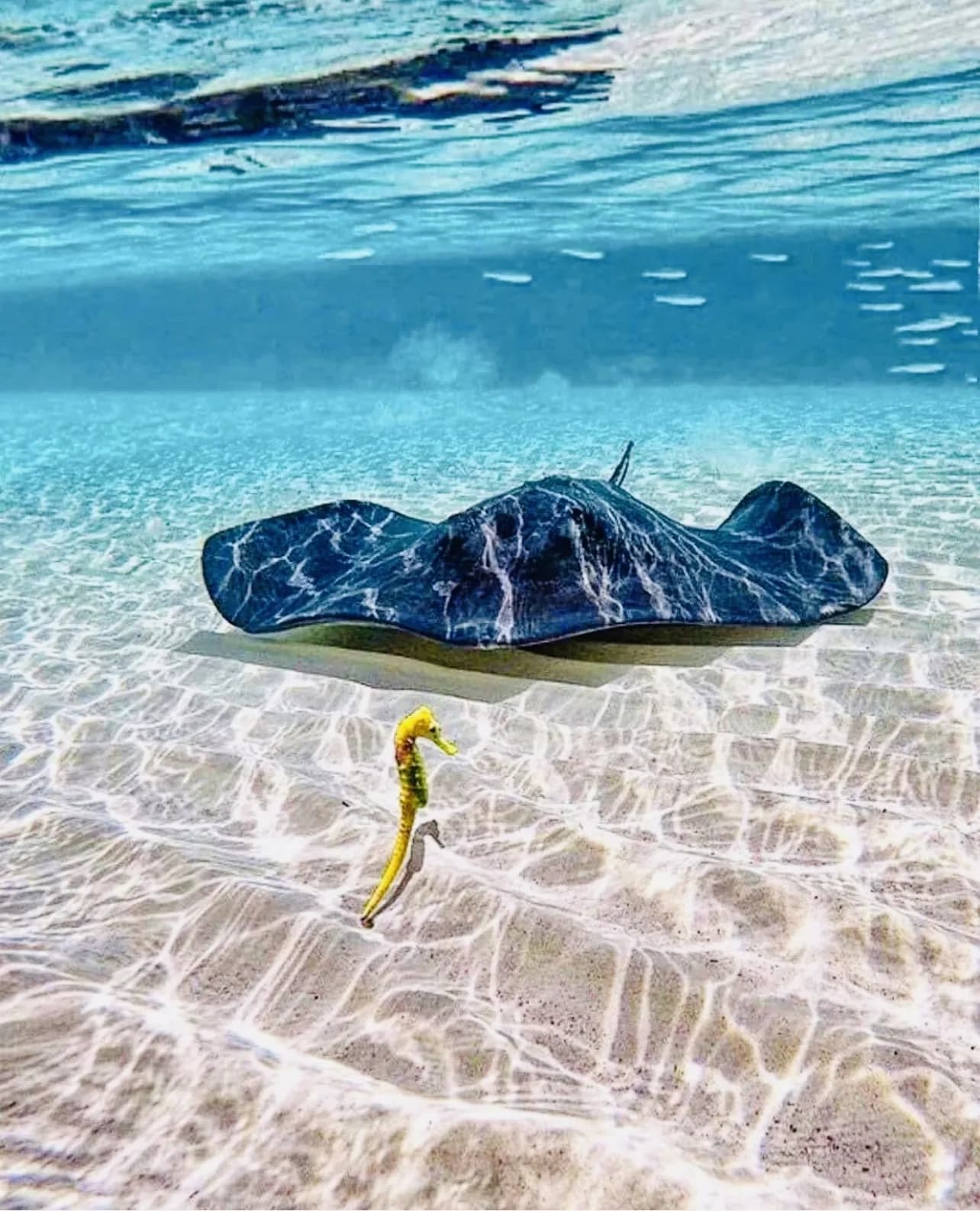
Spotted eagle rays are the prize. They cruise the sand flats at the edge of the reef, dark with white spots and a long whip tail, and often pass in twos and threes. Southern stingrays lie half-buried in the sand; look for the outline and the two eyes.
Barracuda hang motionless in the blue near the boat and are far more curious than dangerous. Nurse sharks rest under ledges during the day and are seen occasionally, never a threat to snorkelers. And Cozumel has one fish found nowhere else on earth, the splendid toadfish, a striped, yellow-finned character that lives in crevices near the bottom; divers see it regularly, snorkelers only with luck and a sharp-eyed guide.
What changes with the season, and what you will not see
The reef fish are there every month of the year. The bigger animals move around. Eagle rays are seen more often in the cooler months, when the water drops a few degrees and they gather along the sand edges; turtles are reliable year-round but most active in the mornings. Summer brings warmer, glassier water and the best light on the coral.
Set expectations too: this is a reef tour, not a whale shark trip, which is a different animal in a different part of the Yucatán. Dolphins occasionally cross the boat's path on the way out and are a bonus, not a promise. What a Cozumel snorkeling tour delivers dependably is coral, color, rays and turtles, and that is more than most Caribbean ports can offer within sight of the ship.
Sea turtles, sea fans and the shallow turtle reef
Between the two big reefs our boats stop at a shallow reef most operators skip, a garden of sea fans where sea turtles feed and rest. Three species live in Cozumel's waters.
Hawksbills have a narrow, hooked beak and eat sponges, so you find them head-down against the reef. Green turtles graze seagrass and are the ones you see on the sandy edges. Loggerheads are the biggest and the least common in the shallows.
Turtles breathe air, so they surface every few minutes. The trick is patience: pick a spot, float still, and let the turtle come up rather than chasing it down. Touching or riding a turtle is prohibited in the Marine Park and stresses the animal; give it a boat-length of space and it will ignore you and keep eating, which is the best photo anyway. Nesting season on the island's beaches runs roughly May through September, and the turtles you meet on the reef are the adults and juveniles that feed here year-round.
Sea fans deserve a second look while you are here. Each fan is a colony of thousands of tiny animals, and the mesh is a hunting ground for flamingo tongue snails, small and spotted, that graze along the branches. Once you know to look, you will find one on most fans.
What lives at the El Cielo sandbar
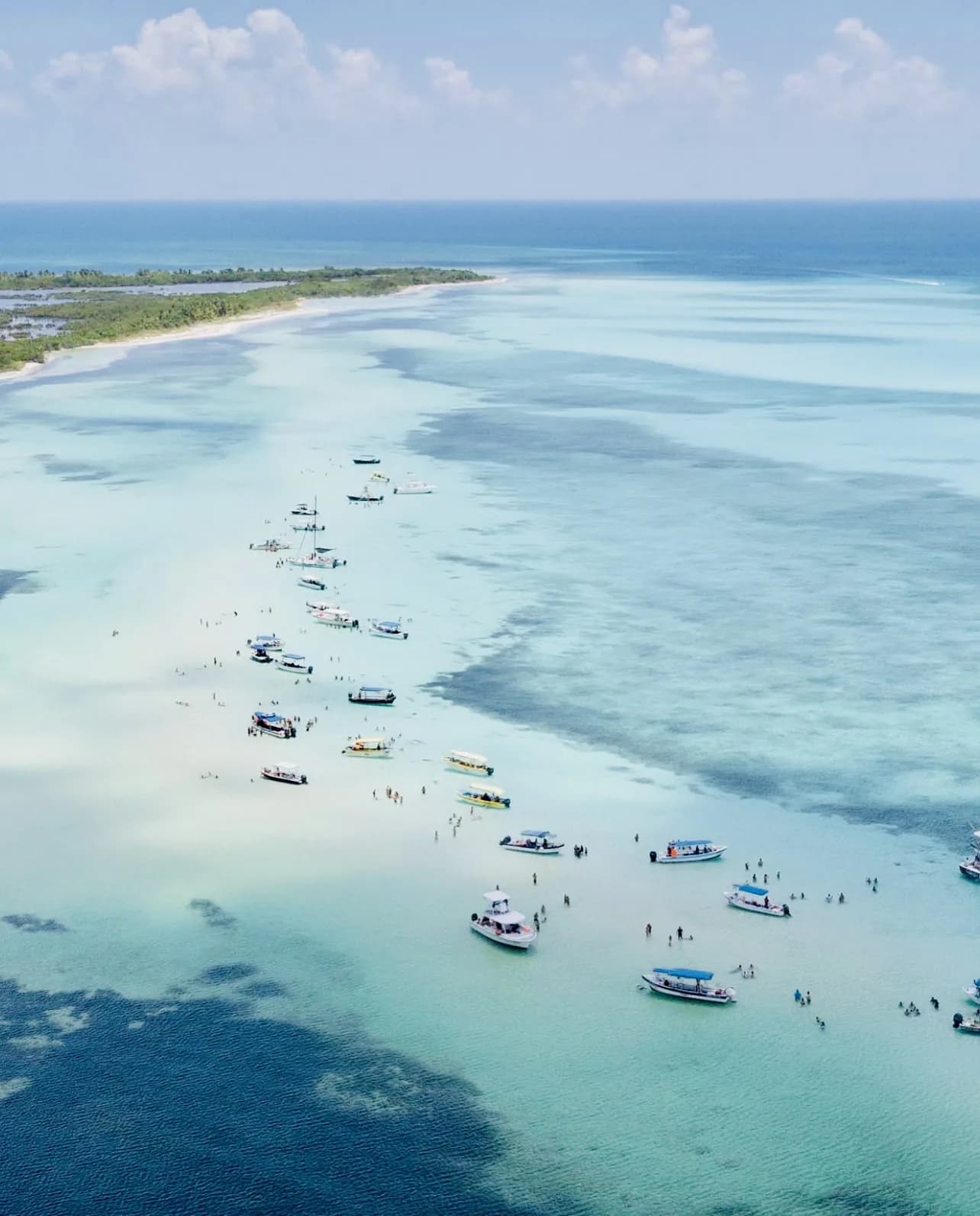
After the reefs the boat moves to El Cielo, a waist-deep sandbar in a sheltered channel where the current fades to nothing. The star here is literal: cushion sea stars, thick, five-armed and rust-colored, lie scattered across the white sand. They are the reason the El Cielo sandbar is the most photographed spot on the island. Look but do not lift them; a starfish pulled out of the water even briefly can be injured, and park rules prohibit handling.
Rays cruise the sandbar too, usually southern stingrays sliding along the bottom, and small schools of silvery fish flash in the shallows. Queen conch move slowly across the sand in their heavy spiral shells. With the boat anchored and drinks and fresh guacamole coming out on deck, this is the part of the day for floating, not swimming. It is also the stop where non-swimmers and small children get the full experience, because the water only reaches your waist.
One rule that matters more here than anywhere: use reef-safe or biodegradable sunscreen, or better still a rash guard. The sandbar is shallow and enclosed, so whatever washes off you stays in the water the starfish live in.
How to see more on your snorkeling tour
A few habits turn a good snorkeling tour into a great one.
- Float, do not swim. Most animals leave when you thrash. Fill your vest, cross your arms, and let the current do the work.
- Look down and sideways, not just ahead. Rays are below you on the sand; angelfish are beside you against the coral.
- Check under every ledge. Lobsters, squirrelfish, morays and nurse sharks all hide in the shade.
- Stay near the guide. Ours are bilingual and know where the turtles rest and where the eagle rays pass. When the guide dives to point, that is your cue to look.
- Defog your mask with the provided solution or a little spit, and adjust the strap before you jump. A leaking mask ruins more sightings than bad luck does.
- Ask what the guide has seen that week. Conditions and sightings shift with season, wind and water temperature, and the crew knows.
- Go early if you can. Morning departures usually mean calmer water, better light on the reef and fewer boats at the sandbar.
A snorkeling tour is only a few hours long, but the reef is the reason Cozumel exists as a cruise stop at all. Go in knowing the names and you come out with a story, not a blur. If you want to see Palancar, Colombia, the turtle reef and El Cielo in one small-group trip with pier pickup and a guaranteed return to your ship, our family-run Cozumel cruise excursions have been doing exactly that since 1996, and we are happy to help you plan the day.