

A snorkeling tour in Cozumel works for nervous swimmers when you know how flotation, mask fit and guide support actually come together.
There is a particular conversation that happens on every cruise ship the night before Cozumel. One person in the group wants to book a snorkeling tour. Another person says, quietly, that they are not really a swimmer. The booking gets dropped, and everybody goes shopping instead.
That outcome is usually unnecessary. Reef snorkeling in Cozumel asks far less of you physically than people assume, and most of the fear traces back to three fixable things: not understanding what keeps you up, not knowing how to make a mask stop leaking, and not knowing what the guide is actually there for. We run Cozumel cruise excursions for a lot of first-timers, and these are the questions that come up before every single trip.
Do You Have to Be a Strong Swimmer?
No. You have to be comfortable floating with your face in the water while wearing something that holds you up. Those are different skills, and the second one is much easier.
Here is what trips people up conceptually. Swimming is work — you are propelling yourself, managing your breathing, keeping your head up. Snorkeling is the opposite of work. You are horizontal, buoyant, breathing normally through a tube, and barely moving. Salt water is significantly more buoyant than the pool you learned in, and a flotation vest removes the question entirely.
What does genuinely matter:
- Being calm with your face in the water. This is the real prerequisite. If putting your face under makes you panic, practice in a hotel pool or shower before the trip.
- Not being prone to severe motion sickness. Boat transfers are short on the leeward side, but take medication beforehand if you know you are susceptible.
- Being honest with the crew. Say "I'm a weak swimmer" at the briefing, not after you are in the water.
What does not matter: being able to swim laps, being young, being fit, or having done it before.
What Flotation Does a Snorkeling Tour Provide?
This is the single question that resolves most anxiety, and it is worth asking your operator directly when you book rather than guessing.
Standard snorkeling tour equipment in Cozumel generally includes a mask, snorkel, fins, and a flotation device. The flotation is the part to confirm. The usual options are a snorkel vest that inflates by mouth so you can adjust how high you sit, a standard life jacket, or a pool noodle you tuck under your chest and arms.
The inflatable snorkel vest is the one you want if it is available. You control the buoyancy, you can let a little air out as you get comfortable, and it sits low enough that it does not push your face out of the water. Ask for it by name.
Fins are worth accepting even if they feel awkward. They mean you barely have to kick to move, which matters on any reef with current. If the fin size offered is wrong, say so — ill-fitting fins cause blisters and cramping, and a cramping calf is where nervous snorkelers get frightened.
One practical note: most operators ask for a rough height and shoe size when you book so gear is sized before you board. Give accurate numbers.
How Do You Stop a Mask From Leaking and Fogging?
A leaking, fogging mask is the number one reason first-timers get out of the water early. It is almost entirely preventable and it has nothing to do with swimming ability.
Test the seal before you get in. Hold the mask against your face without using the strap, breathe in gently through your nose, and let go. If it stays put on suction alone, the seal is good. If it drops, ask for a different mask — this takes ten seconds and saves the whole excursion.
Then the details that actually make the difference:
- Hair out of the seal. A few strands across your forehead under the skirt will leak the entire time. Pull the strap over your hair, not under.
- Facial hair breaks the seal. Nothing to be done about a full mustache on the day, but know it and expect to clear the mask occasionally.
- Strap snug, not tight. Over-tightening deforms the silicone and causes leaks rather than preventing them. It should sit high on the back of your head, not on your neck.
- Defog before you enter. A commercial defog gel, a smear of baby shampoo, or the traditional spit-and-rinse all work. Rub it around the inside of the lens, then rinse briefly with sea water. Do not rinse it clean.
- Learn to clear it. Press the top of the mask against your forehead and blow out through your nose. The water pushes out the bottom. Practice once while standing in shallow water.
Breathe slowly through the snorkel. Fast shallow breathing is what creates the feeling of not getting enough air, and it is a habit rather than a physical limit.
What Does the Guide Actually Do in the Water?
People picture being pointed at a reef and left to it. That is not how a guided trip runs, and the difference matters if you are anxious.
On a guided snorkeling tour Cozumel operators run, the guide is in the water with the group for the duration. They set the route so you are traveling with the current rather than fighting it, they keep the group together, and they count heads continuously. They also tow. If you are tired or drifting behind, a guide will give you a float ring or a hand and bring you back to the boat — this is routine, not an emergency, and nobody on the boat will think anything of it.
Say something at the briefing. A crew that knows which two people are nervous will position itself accordingly, put those people in first while the water is calmest, and keep them nearest the boat. Crews cannot do that if nobody tells them.
The boat also stays with you. On reef drift stops the captain follows the group on the surface, so the ladder is never far away. Getting out early is always an option, and choosing it is not a failure — a short good snorkel beats a long frightening one.
What If You Panic in the Water?
Worth planning for, because the plan is short and knowing it in advance is most of the cure.
Panic in snorkeling almost always starts the same way: water gets into the snorkel or mask, breathing speeds up, and the fast breathing itself creates the feeling of suffocating. The water is not the problem. The breathing pattern is.
The sequence, in order:
- Roll onto your back. Your vest or noodle holds you face-up with no effort at all. Your airway is clear of the water immediately.
- Take the snorkel out of your mouth and breathe normal air. There is no rule saying it has to stay in.
- Slow the exhale. Long out-breaths, longer than the in-breaths. Thirty seconds of this resets almost everyone.
- Raise one arm if you want help. A guide will be with you shortly, and they are watching for exactly this.
Then decide. Plenty of people do this once, settle, and finish the stop happily. Others head back to the boat and watch from the deck with a drink, which is a perfectly good port day.
One thing to avoid: do not try to stand up. On a reef there may be nothing to stand on, and the attempt both damages coral and turns a manageable moment into a frightening one. Stay horizontal or roll onto your back.
Tell someone in your group the plan before you get in. Anxious snorkelers do much better with a designated buddy who is watching for the raised arm.
How Do You Pick the Right Spot for a First Try?
Site choice does more for a nervous first-timer than any amount of technique, and this is where asking before you book pays off.
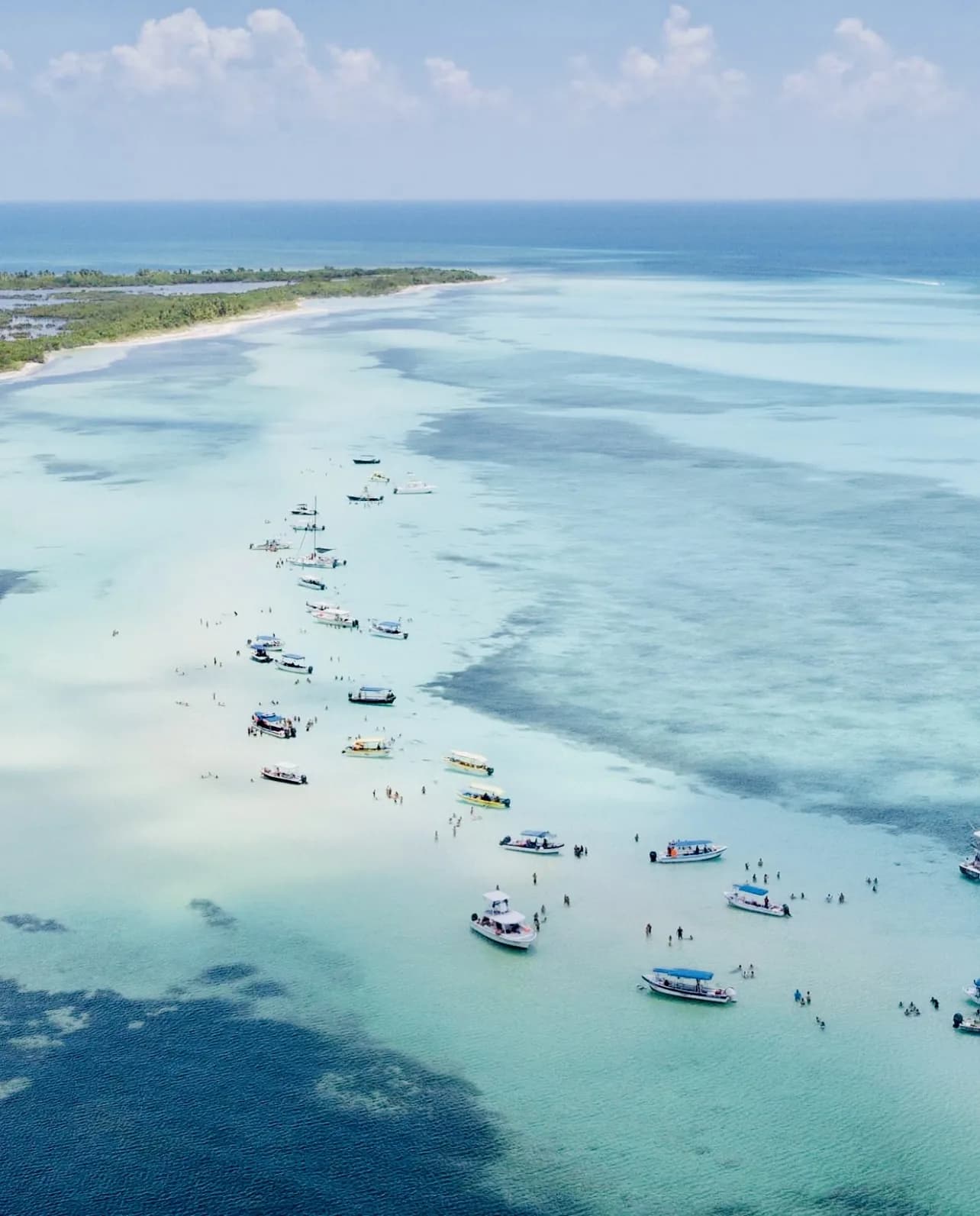
Shallow and protected beats spectacular. The El Cielo sandbar is the obvious example — a stretch of white sand flats on the island's sheltered southwest side where the water is clear, calm, and shallow enough in places to stand. The starfish there are the draw. Look at them, photograph them in the water, and never lift one out; air exposure harms them, and the park rules exist for a reason.
Cozumel's whole western shore is the leeward side, which is why the snorkeling happens there. The reefs sit in the lee of the island, and conditions are usually far calmer than the exposed eastern coast. On a day when wind kicks up, operators move to more protected sites — if the crew suggests a change, that judgment is in your favor.
A few questions to ask before booking any snorkeling tour:
- How deep is the water at each stop?
- Is there current, and is it a drift snorkel?
- Is a flotation vest included, and is it the inflatable type?
- How long is each in-water stop?
- How many guides for how many guests?
Smaller groups suit anxious swimmers better. A large catamaran with sixty people and two guides is a different experience from a small boat with twelve.
A reef snorkel is one of the few things in Cozumel that genuinely rewards the nervous person who tries anyway, because the barrier to entry is so much lower than it looks from the deck of a ship. Float, breathe, look down. That is the whole activity.
If you are weighing up a snorkeling tour and want to talk through flotation, group size, or which site suits a first attempt, tell us when you book and we will match you to the right trip. Browse the Cozumel snorkeling excursions and send your questions before the ship docks — the crew would much rather plan for a nervous guest than surprise one.