

Most visitors to Cozumel have time for one water excursion, not two. A cenote and a reef are opposite experiences — different water, different temperature, different reason to go. This is the honest comparison, plus what a cavern actually is and who each option suits.
Cenote Excursion or Reef Snorkel? How to Spend Your One Slot in Cozumel
Here is the situation nearly every visitor to Cozumel ends up in. You have a limited window — a port day, or one free afternoon in a short stay — and two genuinely appealing options in front of you. You can go underground to a cenote, or you can go out to the reef.
Both are excellent. They are also almost nothing alike, and picking the wrong one for your particular group is how people end up mildly disappointed by something objectively wonderful.
This article is not another explanation of what cenotes are or where to find them — we cover that in our Cozumel cenote guide. This is the comparison: cenote versus reef, side by side, so you can spend your one slot correctly.
They are opposite experiences, not variations on one
The core distinction is simple once stated. A reef snorkel is about life. A cenote excursion is about place.
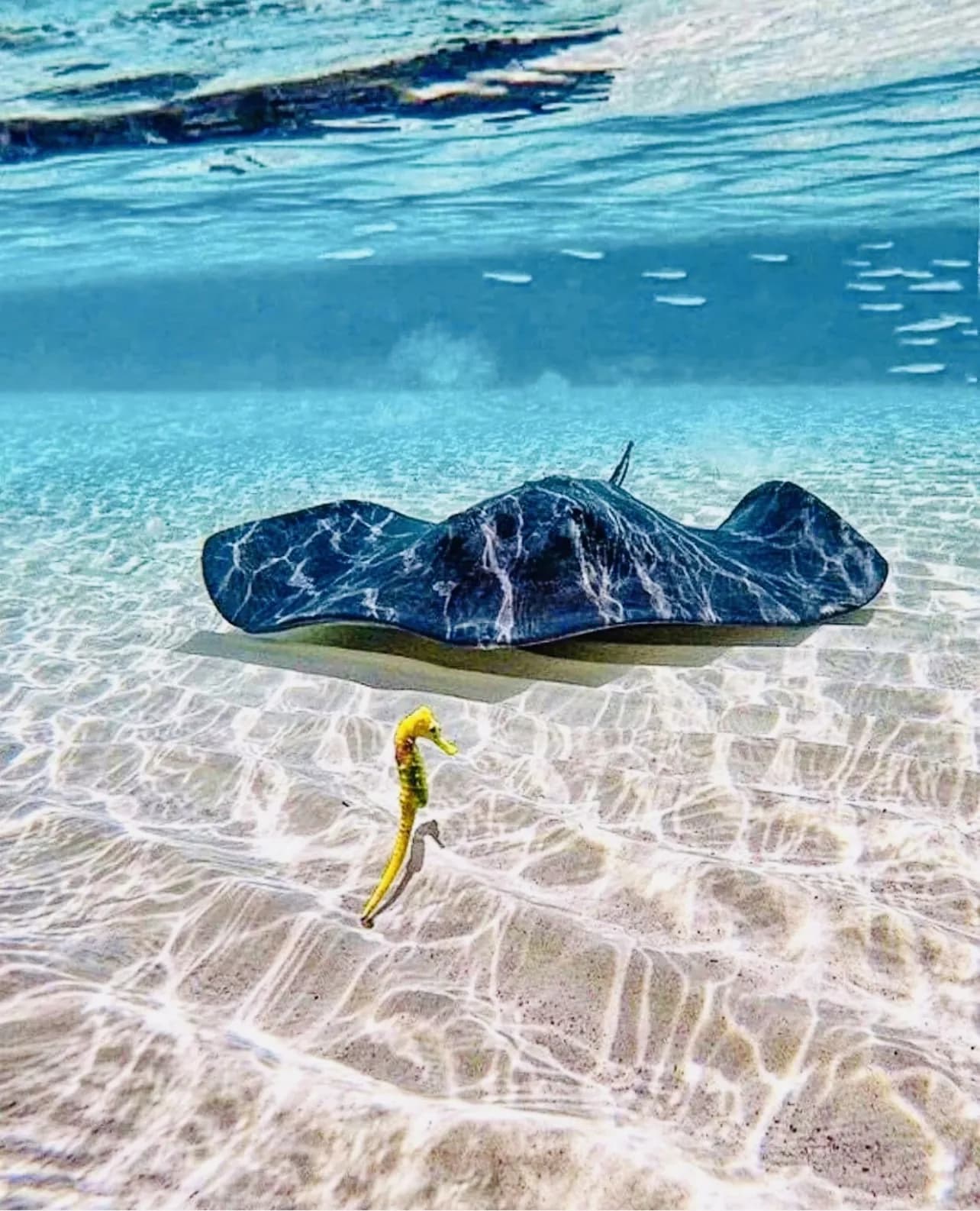
On the reef you are there to see living things: coral structures, schools of fish, the occasional ray or turtle. The water is warm salt water, moving, bright, and full of activity. The experience is horizontal — you drift along a reef line and watch an ecosystem go about its business.
In a cenote you are there to be somewhere extraordinary. Cenotes are freshwater sinkholes formed where limestone bedrock collapsed and exposed the water beneath, and the Yucatán is built on a vast network of them. The water is fresh, still, and startlingly clear — clear in a way ocean water never is, because there is almost no suspended particulate to scatter the light. The experience is vertical and architectural: rock, shafts of light, silence, the sense of being inside the island rather than on top of it.
You will not see much wildlife in a cenote. That is not a shortcoming — it is the point. The absence of movement is precisely what makes the space feel the way it does.
If your mental image of "cenote excursion" is a reef trip in a cave, adjust it. They deliver entirely different things.
What "cavern" actually means, and why it matters
This is the single most common source of unnecessary anxiety, so it is worth clearing up plainly.
In the diving and guiding world, there is a hard distinction between a cavern and a cave.
A cavern is the daylight zone — the part of an overhead environment where natural light still reaches and the way out remains visible. Cavern snorkelling and cavern swimming are accessible recreational activities. No specialist certification is required.
A cave is the section beyond that, where daylight does not reach. Cave diving is a serious technical discipline requiring dedicated training, redundant equipment, and guideline protocols. It is a completely different activity with a completely different risk profile.
Cozumel's cenote experience — including the Jade Cavern cenote tour — is a cavern experience. You are in a lit, guided, open space, not threading through submerged passages in the dark. Anyone who is comfortable in water and can follow a guide can generally do this.
That said, be honest about genuine claustrophobia. If enclosed spaces cause real panic rather than mild nerves, an overhead environment is not the place to test that theory. There is no shame in choosing the open ocean instead — and it is a far better outcome than discovering the problem partway in.
For a fuller picture of the site itself, our Jade Cavern guide covers what the formation is like and what visiting involves.
The physical differences nobody mentions
Four practical things that shape which you will enjoy more.
Water temperature. Cenote water is notably cooler than the Caribbean. The sea around Cozumel is bath-warm most of the year; freshwater underground is not, because it never sits in the sun. Most people find it refreshing and some find it a shock. If you are someone who gets cold quickly in water, this is a real consideration — and it is the detail most often left out.
Buoyancy. Fresh water is less buoyant than salt water. You will float slightly less easily in a cenote than you do in the ocean. It is a subtle difference, not a dramatic one, but it is noticeable if you are used to the sea holding you up.
Visibility. Cenote clarity is genuinely remarkable — often you can see far further than in the ocean, and the sensation of hanging above the bottom in transparent water is a large part of the appeal. Reef visibility around Cozumel is very good by world standards, but it is not cenote-clear.
Light and photography. These photograph completely differently. Reefs need light and colour; cenotes are about contrast, shafts of light, and silhouette. If you are bringing a camera, cenote images tend to be more dramatic and considerably harder to expose correctly. Reef footage is easier and more consistently colourful.
Which one suits your group
Choose a cenote excursion if:
- You have already snorkelled a reef, possibly several, and want something you have not done
- You are drawn to landscape, geology, and atmosphere more than to marine life
- You want the more photogenic, more unusual, more memorable place
- Your group includes people who prefer calm, still water to open ocean with swell and current
- You are visiting when the sea is choppy — cenote water is unaffected by conditions offshore
Choose a reef snorkel if:
- Anyone in the group specifically wants to see fish, coral, and marine life
- You have young children who will be more engaged by animals than by rock formations
- Anyone strongly dislikes cold water or enclosed spaces
- It is your first time snorkelling anywhere, and you want the classic Caribbean experience
- You want the easier, warmer, lower-commitment option
Our Cozumel snorkelling tours cover the reef side. If you are still deciding between snorkelling and diving in general, our snorkelling versus scuba comparison is the better starting point.
Can you do both?
Sometimes — with a caveat.
If you are staying on the island for several days, absolutely. Do them on different days and enjoy each properly.
On a single cruise port day, be realistic. Both are half-day commitments once you include transfer time in each direction, and stacking them means rushing both and watching the clock through the second one. The more satisfying approach is to pick one and do it without pressure.
The better combination on a limited day is usually a cenote paired with a land activity rather than with a second water activity — something like the Jeep and ATV Jade Cavern combination, which covers the island's interior and the cenote in one coherent trip instead of two competing ones.
If you are working out timing, our plan your day tool helps build an itinerary with a realistic return buffer, and the Cozumel cruise port overview explains transfer times from each pier — which materially affects how much of your day is actually usable.
What to bring, and one rule to respect
Cenotes have a rule that reef trips do not, and it matters.
Sunscreen and cenotes do not mix. Cenote systems are enclosed freshwater environments feeding an aquifer, and chemical sunscreens, oils, lotions, and insect repellent do real damage there. Expect to be asked to rinse before entering, and plan to apply nothing beforehand. If you need sun protection, a rash guard is the answer rather than a bottle. Reef-safe or biodegradable products are the minimum standard, and many operators will simply ask you to skip them altogether.
Beyond that:
- A towel and a dry change of clothes — you will be genuinely wet, and cooler than you expect afterwards
- Water shoes or sandals with grip; limestone near water is slick
- Cash for tips and incidentals
- A waterproof phone case if you intend to photograph anything
Our Cozumel packing list covers the rest.
When to go, and how busy it gets
Timing affects a cenote excursion differently than it affects a reef trip, and it is worth understanding why.
Reef conditions depend on the sea — wind, swell, and visibility shift day to day, and a choppy morning can genuinely reduce the quality of a snorkel. A cenote is indifferent to all of that. The water is enclosed, still, and exactly the same whether it is flat calm or blowing hard outside. On a day when the sea is rough, a cenote excursion is not the consolation prize; it is the better call.
What a cenote is sensitive to is light and crowding. The visual drama in a cavern comes from daylight entering the space, so the middle of the day generally gives the strongest effect. That is also when everyone else wants to be there, which is the trade-off. Earlier departures tend to mean fewer people sharing the space, and in an enclosed environment the difference between a quiet group and a busy one is much more noticeable than it is on an open reef.
If several ships are in port on your date, book ahead rather than deciding on the morning. Cenote capacity is finite in a way that ocean capacity is not.
Common questions about cenote excursions
Are there actually cenotes in Cozumel? Yes. Cozumel is the same limestone karst as the mainland Yucatán, so the underground water systems are there too. The island's cenote experience is more compact than the sprawling systems of the Riviera Maya, and the Jade Cavern cenote tour is the way most visitors see it without leaving the island.
Do I need to be a certified diver? No. This is a cavern experience in the daylight zone, not cave diving. No certification is required, and you are guided throughout.
How cold is the water really? Cooler than the Caribbean, which is the main adjustment. Most people describe it as refreshing rather than cold, but if you chill quickly in water, factor it in and bring something warm for afterwards.
Is it suitable for children? It depends far more on temperament than on age. Children who are comfortable in water and interested in caves tend to love it. Children who mainly want to see fish will usually be happier on the reef.
Can I wear sunscreen? Plan on no. Chemical sunscreens, lotions, and repellents damage enclosed freshwater systems, and you should expect to rinse before entering. Use a rash guard for sun protection instead.
Is a cenote better than snorkelling the reef? Neither is better — they answer different questions. The reef is the superior wildlife experience; the cenote is the more unusual place. If you have done one, do the other.
The bottom line
If you want to see marine life, go to the reef. If you want to stand somewhere that does not look like anywhere else you have been, go to the cenote.
For most people who have already snorkelled somewhere warm and are looking for the thing they will actually describe to people back home, the cenote wins — it is the more unusual experience, and Cozumel's cavern setting makes it accessible to anyone comfortable in water without any special training.
When you are ready, you can read the full details of the Jade Cavern cenote excursion — what is included, how long it runs, and what the day looks like — or go straight to booking your Cozumel tour to lock in your slot before the popular times fill.