

Punta Sur is the wildest corner of Cozumel, and this guide covers the crocodiles, sea turtles and birds you can realistically see there.
Most guides to Punta Sur lead with the lighthouse, and fair enough: the view from the top of the Celarain light is the best on the island. But if you ask the guests who rank the park first at the end of their cruise what they actually remember, the answer is almost always an animal. A crocodile that turned out not to be a log, a sea turtle surfacing an arm's length away, a frigatebird hanging motionless over the dunes.
Punta Sur is Cozumel's largest protected reserve, and wildlife is the reason it exists.
This article is written for the passenger who wants to plan a port day around seeing those animals rather than hoping to stumble on them. It complements our main Punta Sur guide, which covers the lighthouse, fees, hours and getting there, by going deeper on what lives in the park, where to find it, when it is most visible, and how to watch it without doing harm.
Why Punta Sur has more wildlife than anywhere else on Cozumel
Cozumel is a busy island along its western shore. Piers, hotels, beach clubs and the town of San Miguel take up most of the leeward coast, and animals that need space have retreated to the places people did not build. Punta Sur is the largest of those places: roughly 2,500 acres of coastline, reef, dune and lagoon at the island's southern tip, managed by the Cozumel Parks and Museums Foundation, with entry fees that fund conservation across the island.
What makes it exceptional is not size alone but variety. Within a short drive inside the park you cross four distinct habitats: a mangrove lagoon system that shelters crocodiles and wading birds, coastal dunes and scrub where iguanas and land birds live, a protected beach where sea turtles nest, and a fringing reef inside the national marine park where turtles and rays feed. Few places in the Caribbean stack those four habitats so closely together, and none of the others sit half an hour from a cruise pier.
The park is also quiet in a way the rest of the island is not. There is no swim-up bar, no jet skis and no music. Animals that would be scarce at a beach club are simply going about their day here, which is why a slow, attentive visit sees far more than a rushed one.
The crocodiles of Laguna Colombia
The star of Punta Sur is the American crocodile, and Laguna Colombia is where you see it. A wooden boardwalk leads to an elevated observation platform over the mangrove lagoon, and on most mornings one or more crocodiles are visible from it, either basking on the mud banks or lying motionless in the shallows with just the eyes and the ridge of the back above the water.
A few things help you spot them. Crocodiles are cold-blooded, so they haul out to warm up in the morning sun and are most visible in the first hours after the park opens, particularly in the cooler months from roughly November through March. Look for straight lines in a landscape of curves: a basking crocodile reads as a fallen log until it blinks. Scan the far bank as well as the near one, and give your eyes a full minute before deciding the lagoon is empty.
American crocodiles are shy and generally avoid people, which is precisely why the viewing arrangement works. Stay on the boardwalk and platform, keep children beside you, and never lean over the rail to get a closer photo. Do not feed them; a fed crocodile learns to associate people with food, and that is how a wild animal becomes a problem animal. The lagoon is well away from the swimming beaches on the Caribbean side of the park, so there is no conflict between watching crocodiles in the morning and snorkeling in the afternoon.
The lagoon rewards patience with more than crocodiles. Herons and egrets stalk the shallows year-round, and in season, roughly November through March, flamingos are sometimes present. The mangroves themselves are a nursery for juvenile fish, which is one of the reasons the reef offshore is as healthy as it is.
Sea turtles: in the water and on the sand
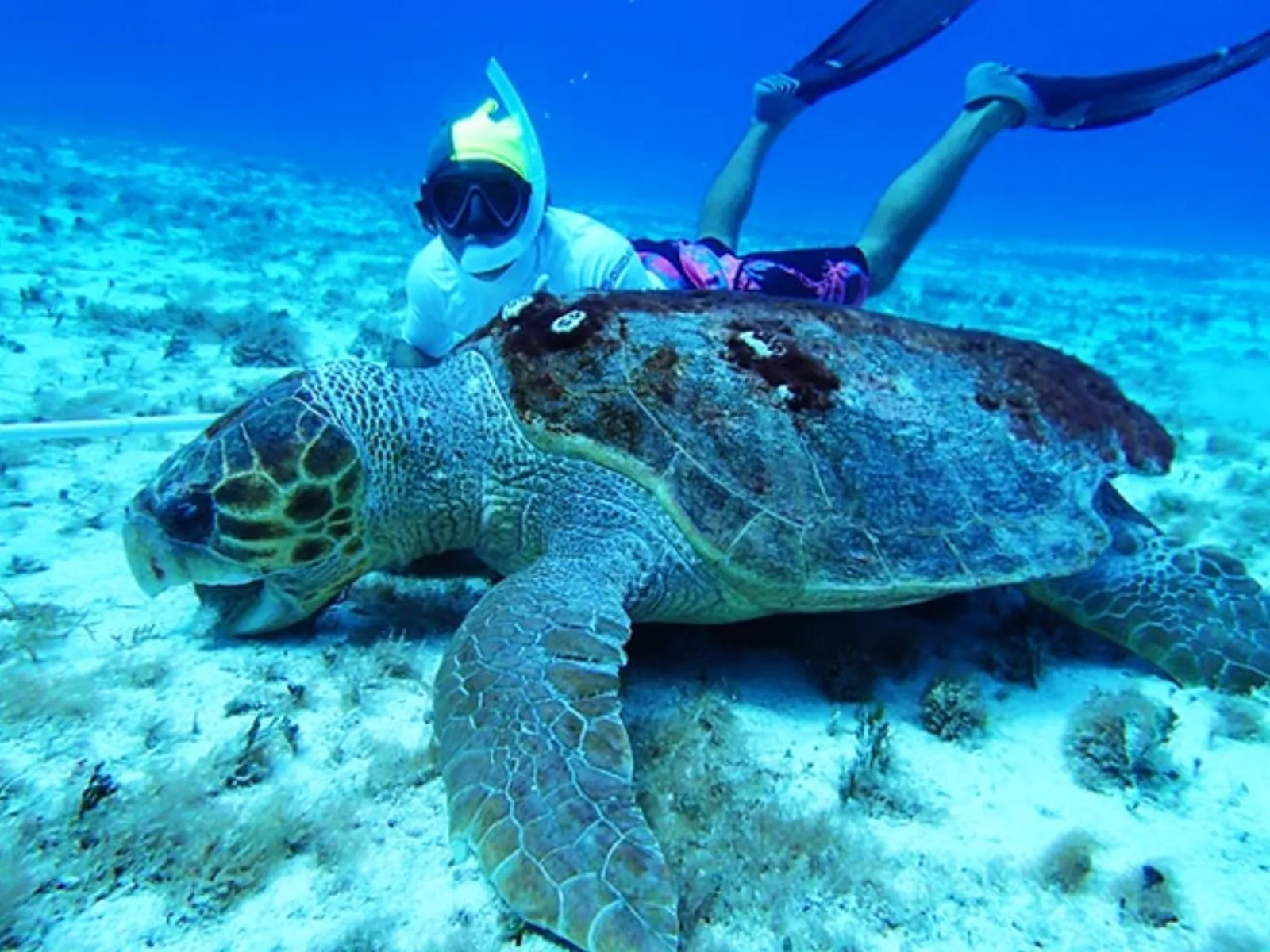
Cozumel's reefs are turtle country, and Punta Sur's stretch of the Arrecifes de Cozumel National Marine Park sees a fraction of the swimmer traffic that the pier-adjacent reefs do. Green turtles and loggerheads feed on the seagrass beds close to shore, and on many days you can watch one graze from the beach without getting your feet wet. Snorkelers who drift quietly along the edge of the seagrass often have a turtle surface within a few metres of them.
The etiquette is simple and it matters. Keep your distance and let the turtle set it. Never touch, chase or try to ride one; turtles that are harassed abandon feeding grounds.
Do not stand on the seagrass or the coral. Wear reef-safe sunscreen, or better still, a long-sleeved rash guard, because the chemicals in ordinary sunscreen wash off into the very water the turtles feed in.
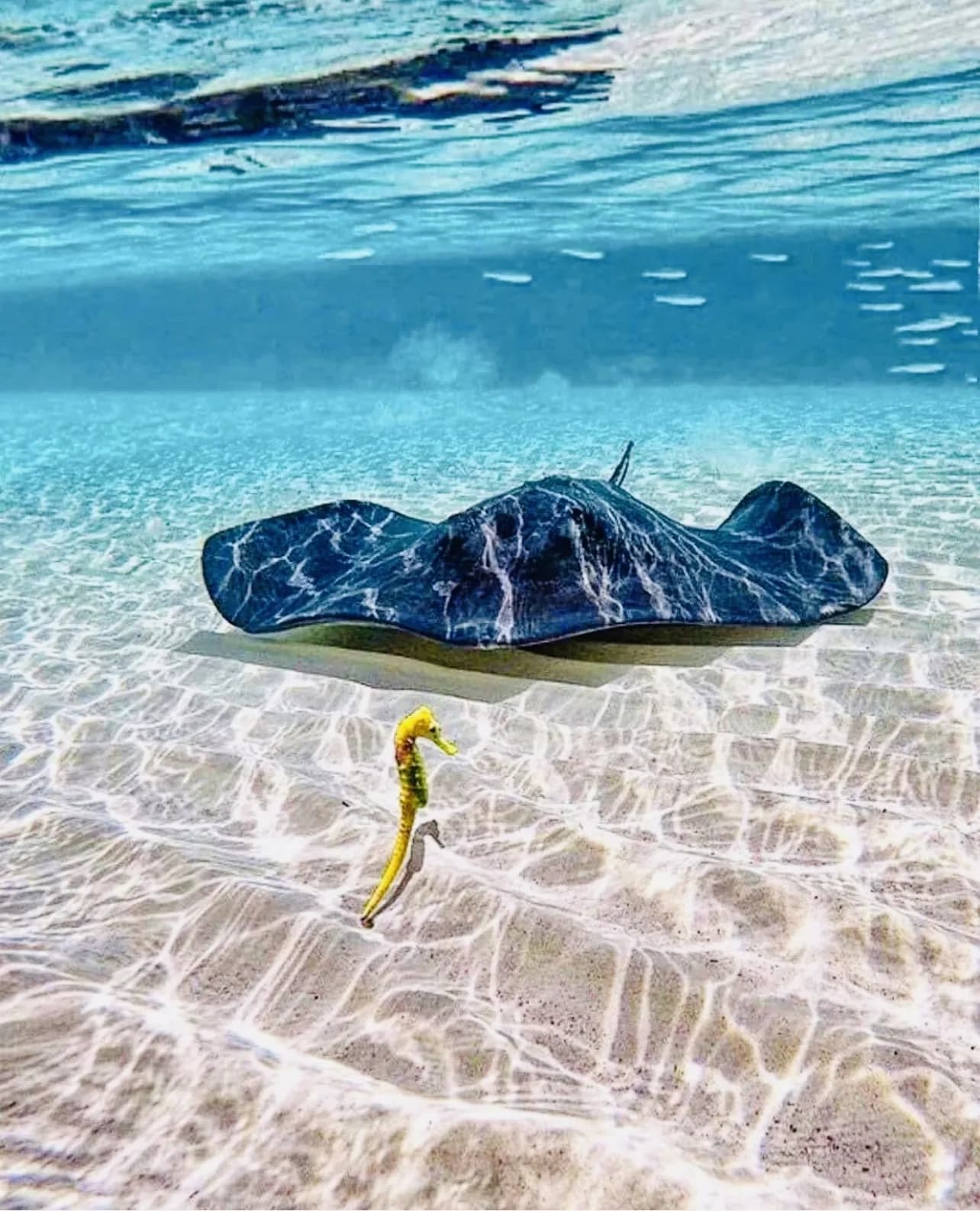
In the cooler months, spotted eagle rays cruise the drop-off beyond the reef, and sharp-eyed snorkelers sometimes see southern stingrays half-buried in the sand. Divers know Cozumel for the splendid toadfish, a brilliantly striped bottom-dweller found almost nowhere else on Earth, though it hides under ledges and is rarely seen from the surface.
Between roughly May and September, the beaches on the park's Caribbean side become nesting grounds. Female turtles come ashore at night to dig nests above the tide line, and the park marks and protects nesting areas through the season. Cruise passengers visit by day and will not see the nesting itself, but you may see marked nests, tractor-tread tracks in the sand where a female came ashore, and, late in the season, the tiny scrambling tracks of hatchlings heading for the sea. Stay off marked areas, never dig, and if you are lucky enough to see a hatchling, watch from a distance and let it make its own way.
Birds, iguanas and the island's endemics
Cozumel is an island, and islands make species of their own. Two birds found here live nowhere else on Earth: the Cozumel emerald, a small hummingbird with a deeply forked tail, and the Cozumel vireo, a warm-brown songbird of the scrub and forest edge. Both can be seen in the dune scrub and around the park's wooded edges, and both are good reasons to bring binoculars. Birders also come for the Yucatán vireo and the black catbird, both of which have small ranges centered on this corner of the Caribbean.
Along the shore the birdlife is bigger and easier. Magnificent frigatebirds hang over the point on long angular wings, brown pelicans work the surf, and ospreys hunt the reef flats. The top of the lighthouse, 134 spiral steps up, is an excellent seabird perch: you look down on frigatebirds rather than up at them.
On the ground, the most conspicuous animal is the black spiny-tailed iguana, locally called garrobo, which suns itself on rocks, walls and paths throughout the park. They are harmless, fast and everywhere. Cozumel's dwarf coati, a small island form of the mainland coatimundi, forages in the scrub and is occasionally seen along the roads early in the day. The island's most famous endemic mammal, the pygmy raccoon, lives mainly in the mangroves at the northern end of Cozumel, so seeing one at Punta Sur would be exceptional; do not plan a visit around it.
Hermit crabs, land crabs and the occasional boa complete the cast. None of these animals is dangerous to a visitor who leaves them alone, and all of them are more visible to someone walking slowly than to someone hurrying between the lighthouse and the beach bar.
Planning a wildlife-first Punta Sur visit from your ship
Wildlife runs on its own schedule, so the single biggest decision is when you arrive. Aim to be at the gate when the park opens. The crocodiles are basking, the birds are active, the light is soft and the tour buses have not landed.
By early afternoon the crocodiles have slipped into the water, the land birds have gone quiet and the beach is at its busiest. An early start turns an average visit into a memorable one.
The drive from the piers takes thirty to forty minutes. From the Punta Langosta pier downtown you are at the far end of the island from the park; the International Pier and Puerta Maya, a few miles south, shave only a little off the journey. Taxis do not circulate inside the park, so independent visitors need to arrange a return pickup in advance, and there is no bus.
Our south-island tours include pickup at any pier, transport, park entry and a guide who knows which bank of the lagoon the crocodiles favoured that week. Plan a minimum of two and a half to three hours inside the park, and remember that it is normally closed on Sundays and keeps shorter hours than the beach clubs; confirm both for your date.
Pack for watching rather than lounging: binoculars, a camera with some zoom, a hat, water, closed shoes for the boardwalk and lighthouse steps, a rash guard and mask for the reef, and reef-safe sunscreen. Leave the drone at home; the park is a protected area and low-flying aircraft disturb nesting birds.
A wildlife-first day here is not about ticking off species. It is about slowing down enough for the park to show you what it holds. Our full Punta Sur guide has the current practical details, and our team at Cozumel cruise tours can match a south-island route to your ship's hours with free pickup at any pier and our Back to Ship Guarantee. Family owned since 1996, and always happy to point you toward the crocodiles.