

Sargassum is the single variable most likely to ruin a Caribbean beach day, and almost no Isla Pasion guide mentions it. Here is why the island's position works in your favour, the one way that advantage can reverse, and how to check conditions yourself before you sail.
Does Isla Pasion Get Sargassum? How Cozumel's North Coast Actually Behaves
There is a photograph problem in Caribbean travel.
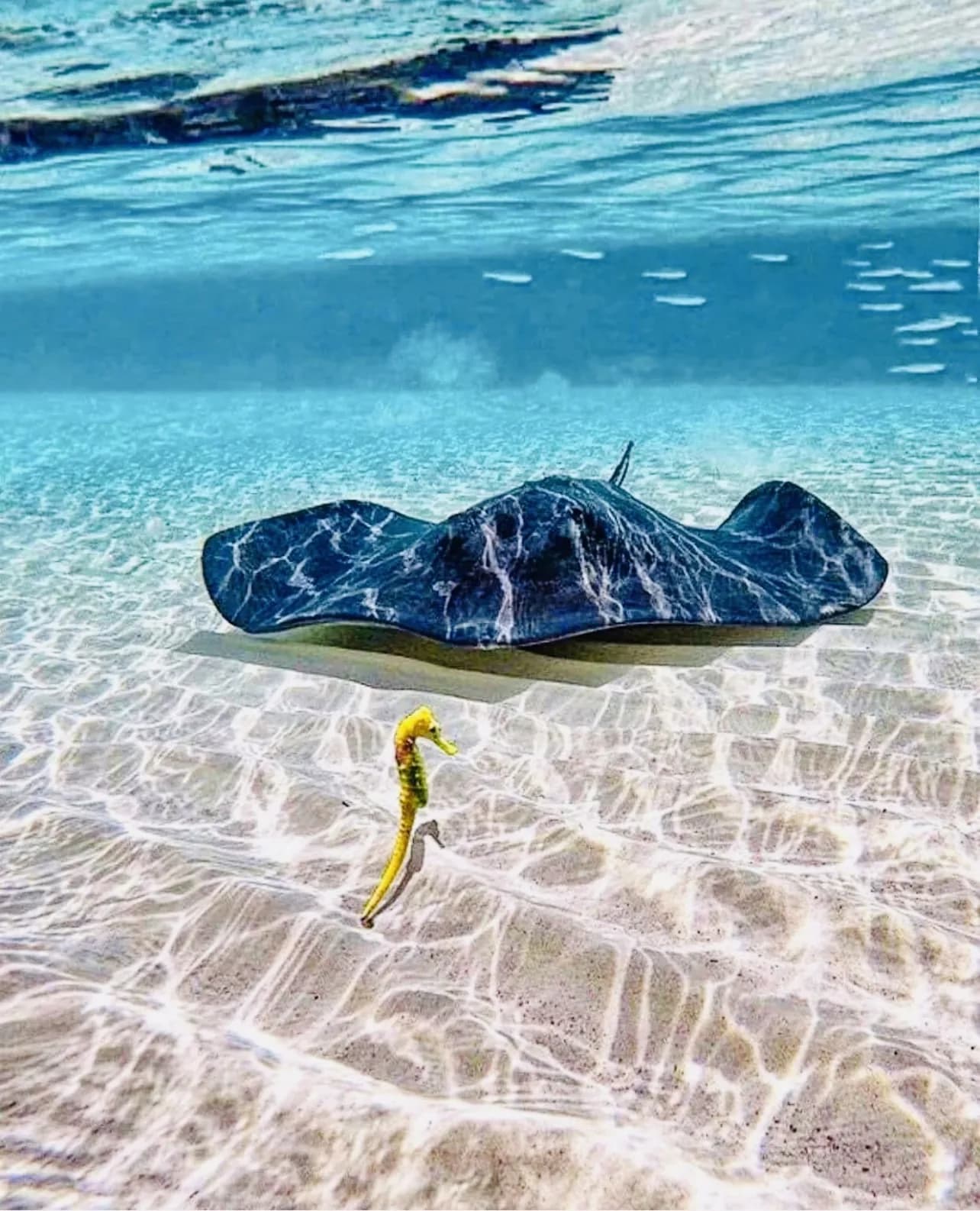
Every listing for Isla Pasion shows the same thing: white sand, water the colour of a swimming pool, nobody in frame. Those photographs are real. They are also taken on good days, and the thing most likely to produce a bad day in this part of the world is a brown macroalgae called sargassum.
It is remarkable how rarely this comes up. You can read a dozen Isla Pasion guides covering what is included, how to get there and what to bring, and not one of them will tell you what the beach looks like in late June of a heavy year.
So here is that article. Not a forecast — nobody can honestly give you one — but an explanation of the mechanism, an honest read on where Isla Pasion sits within it, and a method for checking conditions yourself in the days before you sail.
What sargassum actually is
Sargassum is a genus of brown seaweed that, unusually, spends its entire life floating. It never attaches to the seafloor. The two species that dominate the Caribbean influxes, Sargassum natans and Sargassum fluitans, drift in mats held up by small gas-filled bladders.
In open water it is genuinely valuable — floating sargassum is habitat, nursery and shelter for turtles, juvenile fish, crabs and seabirds. The historic Sargasso Sea in the North Atlantic is an entire ecosystem built on it.
The problem is not the seaweed. The problem is quantity and location.
Since around 2011 a recurring formation now called the Great Atlantic Sargassum Belt has appeared, at times stretching thousands of kilometres from West Africa across to the Gulf of Mexico. Nutrient loading and shifting ocean conditions are the leading explanations. Whatever the cause, the consequence for the Mexican Caribbean has been periodic arrivals of far more sargassum than any shoreline can absorb.
When it beaches and begins to decompose, it stops being seaweed and starts being a nuisance: it browns the water, it smells strongly of sulphur as it releases hydrogen sulfide, and the mats can carry stinging hydroids that cause an itchy rash. Large accumulations get physically removed by crews and boats where resources allow.
The seasonal pattern, honestly stated
There is a rhythm, and it is worth knowing even though it is not a guarantee.
In broad terms, across the Mexican Caribbean:
- December through February is typically the quietest window. This is also peak cruise season, which is a fortunate alignment.
- March and April is when arrivals usually begin building.
- May through August is generally the heaviest stretch, with the worst of it often falling somewhere in the May-to-July range.
- September through November typically tapers off.
Now the caveats, which matter more than the pattern.
Year-to-year variation is enormous. Some seasons produce a belt so large it is visible from orbit; others are comparatively mild. Within a single season, arrivals come in pulses tied to currents and wind rather than as a steady flow — a beach can be heavily affected one week and clear the next. And the pattern describes the region, not any particular beach. Two shorelines a few kilometres apart can look completely different on the same afternoon.
Which brings us to the part that actually matters for Isla Pasion.
Why geography is the whole answer
Sargassum does not arrive randomly. It is carried west and northwest by the Caribbean Current and pushed by the prevailing easterly trade winds. It comes from the open Atlantic and the eastern Caribbean, and it hits whatever faces that direction first.
Cozumel is an island running roughly northeast to southwest, and this orientation does something enormously useful for visitors.
The east coast is the windward side. It faces the open Caribbean directly. It gets the wind, the swell and, in a heavy season, the sargassum. This is also why the east coast has almost no development, no resorts and strong currents. It is a beautiful, wild place to drive along and a poor place to plan a swimming day, sargassum or not.
The west coast is the leeward side. It faces the Cozumel Channel and the mainland, and the island itself acts as a physical barrier absorbing what arrives from the east. This is where the cruise piers, the reefs, the dive operations and essentially every beach club are located. That is not a coincidence — it is the reason all of it is there.
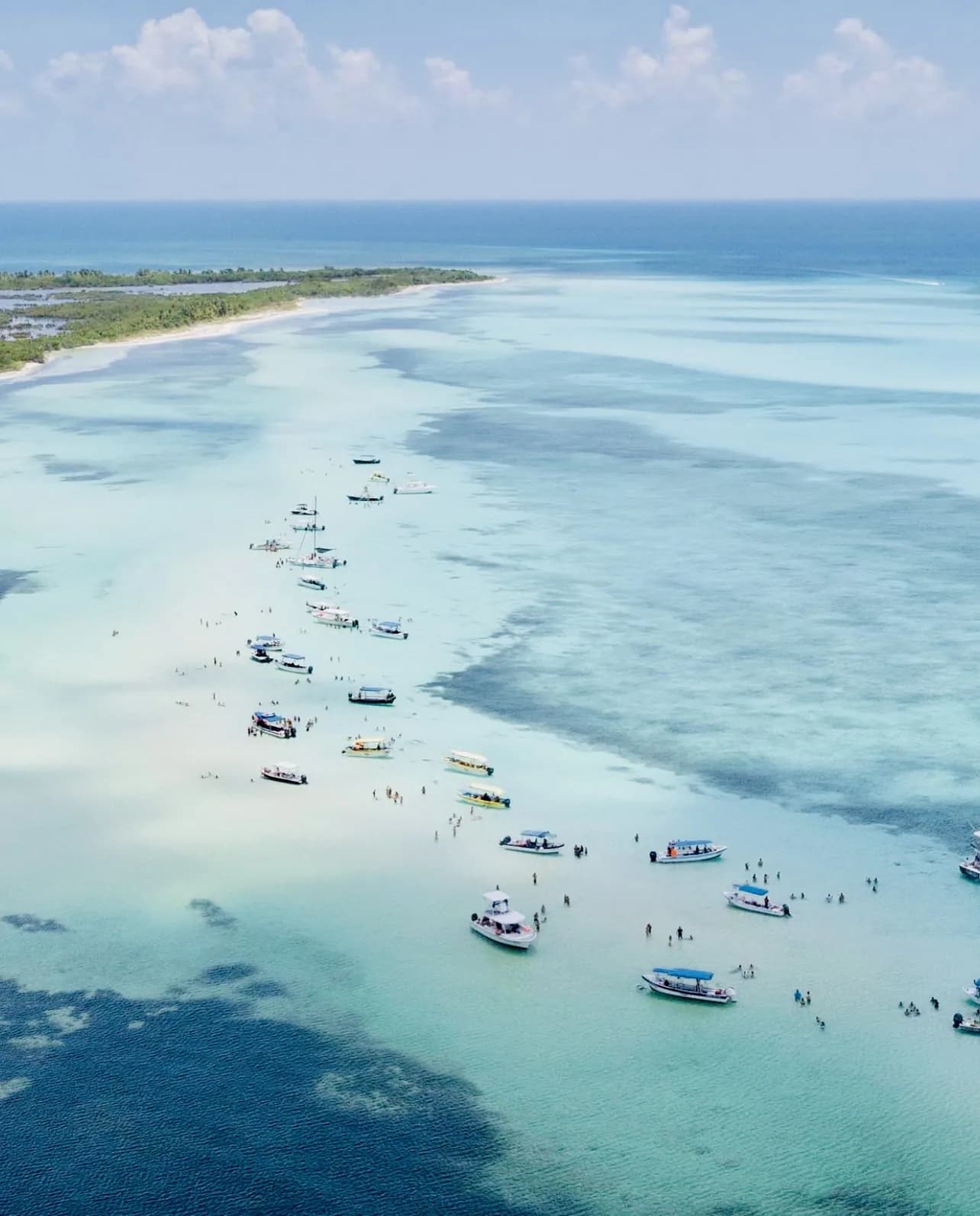
Isla Pasion sits off the northern end of the island, on the sheltered side, behind a shallow lagoon. In terms of exposure to an easterly sargassum influx, this is close to the most protected position available. It is around the corner from the windward coast, tucked into the north, and separated from open water by the lagoon system you cross to reach it.
Combine that with water that is exceptionally shallow and calm over a sandy bottom, and you have a beach that structurally has a much better chance of looking like the photographs than an east-facing shore does on the same day.
Our Isla de la Pasion getting-there and lagoon crossing guide covers that geography in more detail if you want to picture the route north and the crossing itself.
The honest caveat: shelter cuts both ways
Here is the thing most sunny write-ups would leave out.
The same features that protect a sheltered, shallow, enclosed beach also mean it has very little wave energy. Wave energy is what flushes a shoreline. On an exposed beach, seaweed that washes in also washes back out, and the water self-clears over a tide cycle or two.
In a calm, protected, shallow bay, whatever does drift in has less to push it out again. It can sit. That does not happen often on the north side, but when a genuinely large influx coincides with an unusual wind direction, a sheltered beach can hold onto material longer than an exposed one would.
So the accurate statement is not "Isla Pasion never gets sargassum." It is:
> Isla Pasion is unusually well positioned to avoid sargassum, and on the rare occasions when a significant amount arrives, calm water is slower to clear it.
In practice this means beach crews and manual removal do the work that waves do elsewhere, and the difference between a good day and a mediocre one often comes down to how recently the beach was cleaned. It is a reasonable thing to ask about.
How to check conditions before you go
You cannot forecast this months ahead, but you can get a genuinely useful read in the week before you sail. Three sources, in order of usefulness.
1. The regional monitoring maps. Quintana Roo's sargassum monitoring network publishes beach-by-beach condition maps updated regularly through the season, colour-coded from clear through to excessive. This is the closest thing to real-time ground truth that exists.
2. Satellite bulletins. The University of South Florida's Optical Oceanography Laboratory runs a Sargassum Watch System that publishes monthly outlook bulletins for the Caribbean and Gulf of Mexico based on satellite imagery. These will not tell you about one beach, but they will tell you whether the season overall is running heavy or light — which is the single most useful piece of context.
3. Recent photographs. Search the location on social platforms and sort by most recent. People post beach pictures constantly and they do not edit out seaweed. A week of recent photos from Cozumel's north side will tell you more than any long-range prediction.
If you are still choosing your travel window, our best time to visit Cozumel guide covers how sargassum season overlaps with weather, crowds and pricing.
What to do if you get a bad week anyway
Sometimes the timing simply does not cooperate. A few things are worth knowing.
Sheltered and shallow still wins. Even in a heavy influx, the leeward side of Cozumel and the northern beaches are consistently the better bet compared with anywhere facing the open Caribbean.
Reef snorkelling is often unaffected. Sargassum is a surface and shoreline phenomenon. The reefs off the southwest coast sit in deeper, moving water, and underwater visibility can be excellent on a day when a beach looks unappealing. If the beach forecast is discouraging, switching your day to a snorkelling excursion on the reefs is frequently the right move rather than a consolation prize.
Boats can move. Operators who run these waters daily know which stretches are clear on any given morning, in a way no website can. A local operator with flexibility is worth more in a bad week than a big-brand booking that cannot deviate from a fixed plan.
Decomposing sargassum is a mild health consideration. The sulphur smell comes from hydrogen sulfide. At beach concentrations it is unpleasant rather than dangerous, but it can irritate eyes and airways, and people with asthma or respiratory sensitivity sometimes notice it. Large piles are also best left alone — the mats can hold stinging organisms.
The short version
If you are choosing Isla Pasion and worrying about seaweed, the geography is on your side. It sits on the sheltered northern end of an island whose own landmass blocks the direction sargassum arrives from, behind a shallow lagoon, on calm sandy water. Structurally, it is one of the better bets in the region.
It is not immune, and in the rare event that a large influx does reach it, calm water clears more slowly than exposed water does. That is the real tradeoff, and it is a good one.
Check the monitoring maps in the week before you sail, look at recent photos rather than marketing images, and know that on the worst days the reefs are usually still excellent. Then stop worrying about it.
You can look at the Isla Pasion private island beach day itself, read our full Passion Island guide, or book a Cozumel excursion when your dates are set.