

Chankanaab is not just a beach park with an entrance fee — it is a protected national park inside Cozumel's reef system. Here is what that designation actually regulates, why the sunscreen rule is enforced, and how to visit without damaging what you came to see.
Chankanaab National Park: What Protected Status Means for Your Visit
Most visitors meet Chankanaab as a destination — a gate, a fee, a beach, a reef, a good day out. Fewer arrive knowing they are entering a protected national park, and fewer still know that the word "national park" in this context is not decoration. It governs what you may put on your skin, where you may put your hands and feet, and which parts of the property you may enter at all.
If you have already decided to go and want the practical logistics — fees, what is included, arrival timing, how to get there from each pier — our complete Chankanaab Park Cozumel guide covers that ground thoroughly. This article answers a different question: what the protected designation actually means, why the rules exist, and how to behave inside a park where the main attraction is alive.
Chankanaab is a park because of what is under the water
The name comes from Maya and is usually translated as "small sea" — a reference to the natural lagoon at the heart of the property. That lagoon is the reason the site was protected in the first place, and understanding it explains nearly every rule you will encounter.
The lagoon is not a pool that was dug and filled. It connects to the open ocean through a system of underground limestone channels, which is why its water level moves with the tide and why it supports marine life despite sitting inland from the shore. It is a genuinely unusual geological feature and an extremely fragile one — a closed, low-volume system with limited flushing, where contaminants do not disperse the way they do in open water.
That fragility is why the lagoon itself is generally closed to swimming. Visitors regularly arrive expecting to get in, and are disappointed to find it is for viewing only. This is not the park withholding an amenity. Sustained swimming traffic in a semi-enclosed system of that size would degrade it quickly and permanently, and the decision to close it was the reason there is still something there to look at.
Beyond the lagoon, the park sits against Cozumel's western reef shelf — part of the wider reef system along Cozumel's leeward coast that carries protected status, and itself a northern section of the Mesoamerican Barrier Reef, the largest reef system in the Western Hemisphere. The snorkelling at Chankanaab is not a separate attraction from the conservation story. It is the conservation story, viewed from above.
The sunscreen rule is real, and it is enforced
This catches more visitors than any other regulation, and it produces genuine frustration at the gate — so it is worth understanding before you pack.
Conventional sunscreen is not permitted in the water. Staff check, and enforcement is not casual. You will either be asked to shower it off, or to swap for an approved product, which is available on site at a markup that reflects the captive market.
The reasoning is well established. Several common UV-filtering compounds in mainstream sunscreens are toxic to coral at low concentrations, contributing to bleaching and interfering with the reproduction and development of juvenile coral. In open ocean this is diluted; at a site where thousands of people enter a confined stretch of shallow water above living coral every day, the cumulative load is substantial and measurable.
What to do instead, in order of preference:
Bring a mineral-based sunscreen. Look for products whose only active ingredients are non-nano zinc oxide or titanium dioxide. Be sceptical of front-of-bottle marketing — "reef friendly" and "reef safe" are unregulated phrases with no legal definition. Read the active ingredients panel, not the claim.
Better still, cover up. A long-sleeved rash guard is the most effective option available and removes the question entirely. It outperforms any sunscreen for sustained snorkelling, does not wash off, does not need reapplication, and puts nothing in the water. Most experienced snorkellers in Cozumel wear one for exactly these reasons. Our Cozumel packing guide covers what else is worth bringing from the ship.
Apply anything you do use well before you arrive — ideally the night before or early morning — so it has bound to your skin rather than sitting on the surface ready to rinse off in the first ten minutes.
The rules that protect the reef itself
Coral is an animal, it grows slowly, and it is far more vulnerable to casual contact than its appearance suggests. The regulations that follow all descend from that single fact.
Do not touch the coral — with anything. Hands, fins, knees, or a steadying palm on what looks like bare rock. Coral is covered in a living tissue layer with a protective mucus coating; contact strips it and opens the site to infection. A colony that took decades to grow can be killed by a season of casual handling.
Do not stand up on the reef. This is the most common damage mechanism at any shallow snorkelling site, and it is almost always accidental — a tired snorkeller putting their feet down to rest. Learn to float, or stay within reach of the park's ladders and platforms. If you are not a confident swimmer, wear a flotation vest and stay where you can rest without touching the bottom.
Do not take anything. Coral fragments, shells, sand, and living creatures all stay. Removing marine material from a protected area is prohibited, and beyond the legality, empty shells are habitat — hermit crabs are entirely dependent on them.
Do not feed the fish. Feeding alters natural behaviour, concentrates fish unnaturally, shifts diet toward food they cannot process, and makes them aggressive toward subsequent visitors.
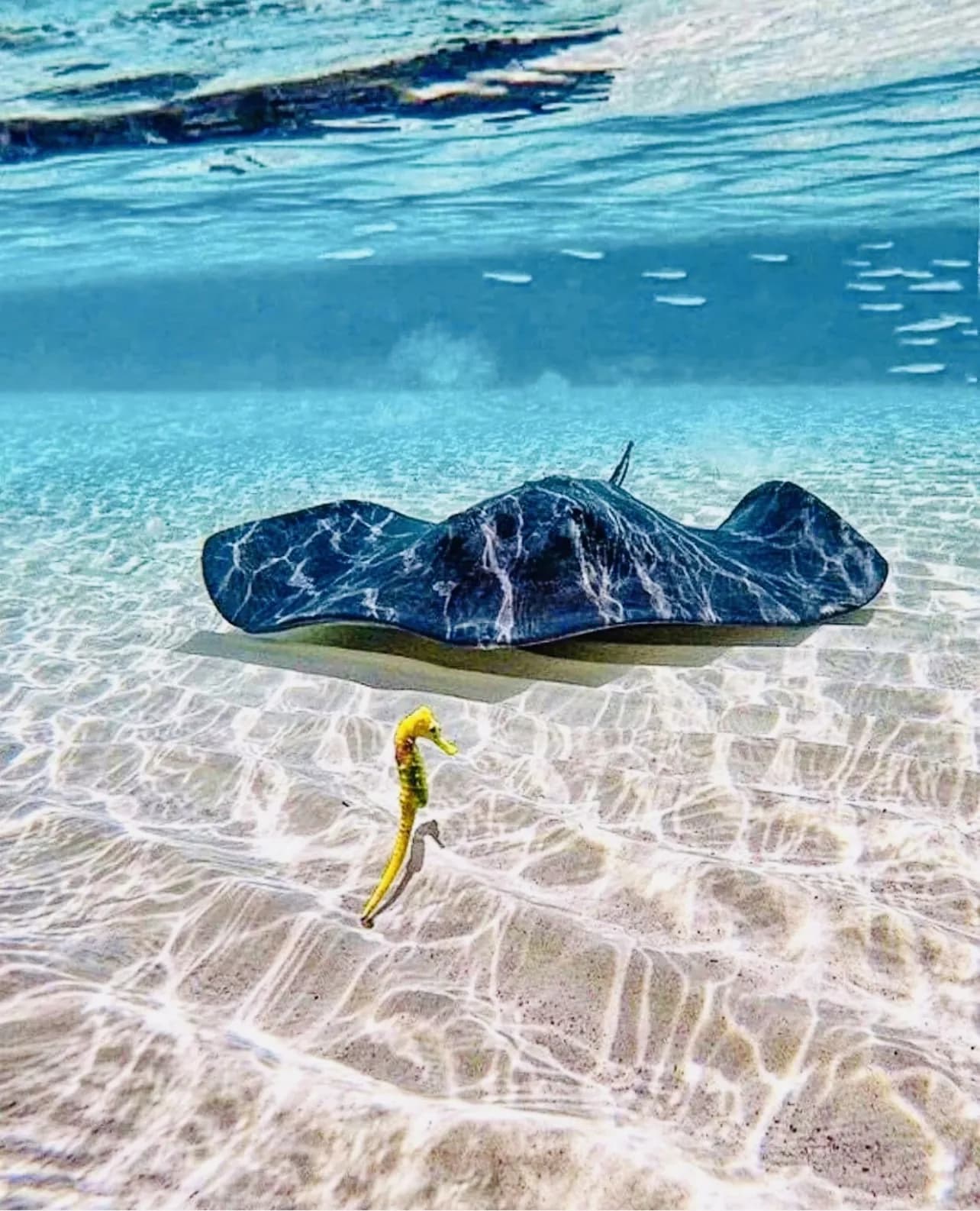
Do not chase or corner wildlife. If a ray, turtle, or fish moves away, let it. Cornering an animal against a reef wall for a photograph is stressful for it and occasionally hazardous for you.
Watch your fins. A large proportion of reef damage comes from fin kicks by people who never realised they made contact. Keep a wide margin, kick from the hip with a slow flutter, and be conscious of what is behind and below you.
What else the protection covers
The designation extends beyond the water, which surprises people who came only to snorkel.
The botanical collection on the grounds is a working conservation asset, not landscaping — a substantial collection of tropical plant species, including native Cozumel flora, laid out along shaded walking paths. It is genuinely worth the twenty minutes, particularly in the midday heat when the water is at its most crowded.
There is also a replica collection of Maya architectural pieces along the garden paths, and — this catches people out — genuine archaeological remains on the island are protected under separate Mexican heritage law with its own restrictions.
The park's captive marine mammal programmes operate under Mexican regulation and are the one part of the property where visitors sometimes weigh ethical questions of their own. That is a personal decision, and it is worth noting that these programmes are optional, separately priced, and entirely skippable. Nothing about a Chankanaab visit requires participating in them, and the reef, gardens, and beach stand on their own.
Visiting well is mostly about timing
The single most effective thing a considerate visitor can do is also the thing that improves their own day: arrive early.
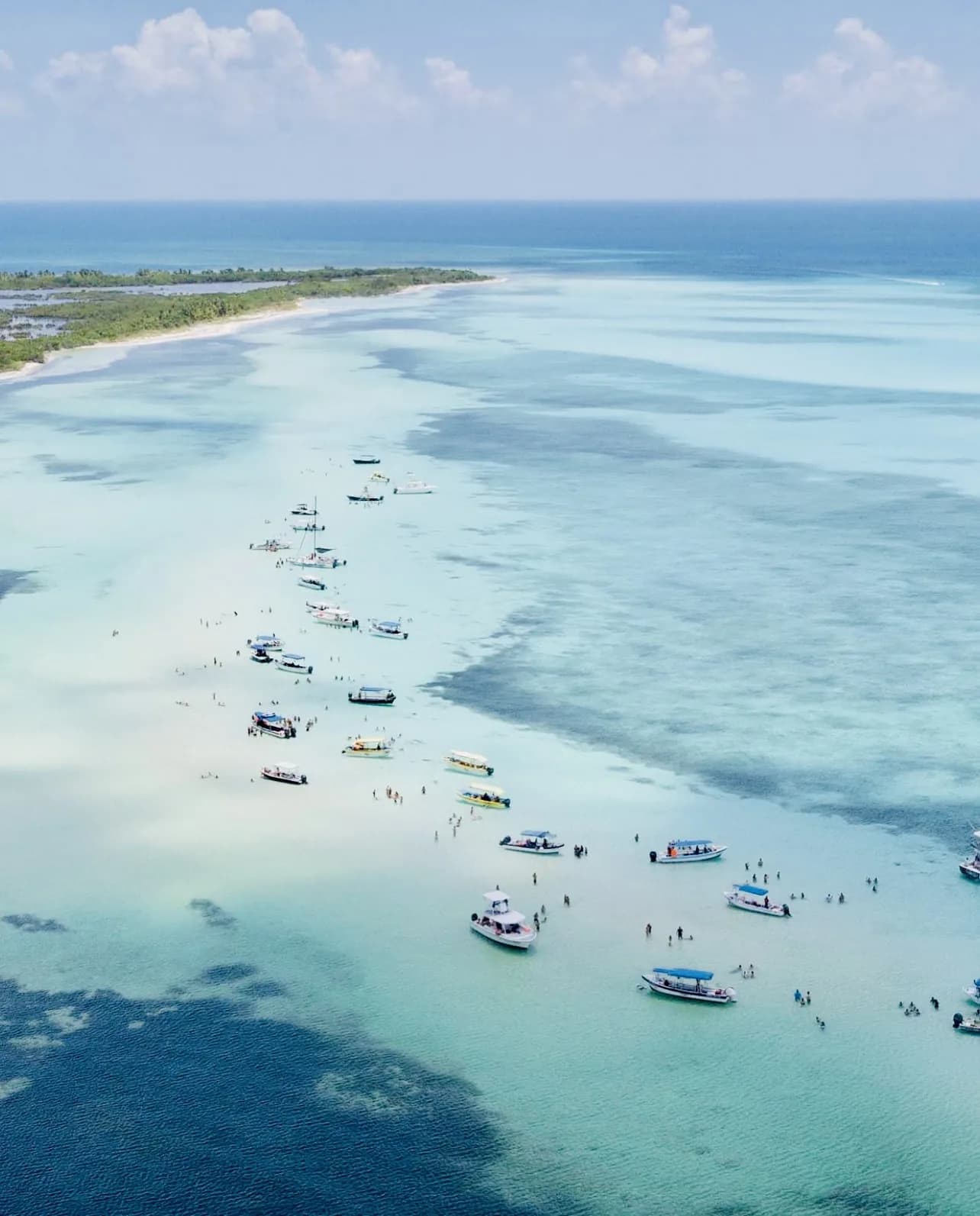
Chankanaab's load is concentrated into a narrow midday window when several ships are in port simultaneously. Pressure on the reef, the water clarity, the queues, and the general experience all degrade together during those hours. An early arrival means better visibility, calmer water, more space, and a meaningfully lighter footprint. Checking which ships are in port — our Cozumel cruise port overview explains how the three piers feed the island — tells you what kind of day to expect before you commit.
A few other habits that matter:
- Use the designated entries. The ladders and platforms exist to keep hundreds of daily entries off the shallow coral.
- Take your rubbish with you, including anything that blows loose. Plastic in the water at a protected reef site is the one visitor impact with no upside whatsoever.
- Keep noise down in the garden and lagoon areas. They are habitat for birds and iguanas as well as scenery.
- Follow staff instructions without arguing. The people enforcing these rules are protecting the asset that makes their jobs exist.
Why this is worth caring about
It is tempting to treat conservation rules at a paid attraction as bureaucracy — another queue, another restriction, another upsell on approved sunscreen. That reading misses what is actually happening.
Cozumel's reefs are under real, documented pressure from bleaching events, storm damage, disease, and the sheer volume of visitors that make the island's economy work. Sites like Chankanaab exist in the difficult middle ground of conservation: they must let people in, because access funds protection and because people who have seen a reef care about reefs. But every admission is a small cost to the thing being admired.
The rules are the mechanism that keeps that trade survivable. A visitor who wears a rash guard, keeps their fins off the coral, and stays out of the lagoon costs the park almost nothing and gets the full experience. A visitor who ignores all three does measurable damage and gets exactly the same day.
That is the whole argument. It is not a demanding standard.
If Chankanaab is on your list, the practical details — current entry fees, what admission covers, how to get there from each pier, and how it compares to open-reef alternatives — are all in our Chankanaab Park guide for cruise visitors. If you would rather snorkel outside the park on open reef, our Cozumel snorkeling tours visit sites along the same protected reef system with the same conservation standards, and our things to do in Cozumel overview covers the rest of the island.
However you spend the day: leave the reef exactly as you found it.