

A snorkeling tour in Cozumel provides the mask, snorkel, fins and vest, so here is what to pack yourself and what to leave in your cabin.
The most common pre-trip question we get is not about reefs or starfish. It is about gear. Cruise passengers want to know whether they should buy a snorkel set before leaving home, whether their prescription glasses are going to be a problem, and whether a GoPro is worth the cabin space.
The short answer is that a good snorkeling tour provides everything you need to breathe and float, and the things worth packing yourself are small, light, and mostly about comfort. This guide walks through exactly what is on the boat, what you should bring, and what to leave behind.
Our snorkeling tour Cozumel includes all snorkeling equipment and life vests, plus marine park fees, so you can step off the ship with nothing but a small bag. What goes in that bag is the rest of this article.
What does a snorkeling tour provide?
Every guest gets a mask, a snorkel, fins, and a flotation vest. The mask and snorkel are the parts people worry about most, and they are the parts the crew pays most attention to. A tour boat carries a range of mask sizes because faces vary more than people expect, and a mask that fits a tall adult will leak on a narrow-faced teenager. Guides fit masks at the start of the trip and swap them until the seal is right.
Fins come in a range of sizes too. Open-heel fins with an adjustable strap are the standard on tour boats because they fit more feet and are easier to put on in the water. If you have unusually large or small feet, mention it when you board so the crew can set the right pair aside before the first stop.
The flotation vest is required in the Cozumel Reefs National Marine Park, and it is not optional even for strong swimmers. It inflates by mouth, so you can adjust how much lift you want. Nervous snorkelers keep it fully inflated and float at the surface. Confident swimmers add just enough air to rest between reef sections.
Beyond gear, the boat carries fresh water, shade, and a crew trained in water rescue. Our guides are bilingual marine naturalists who coach beginners one on one and point out species as they appear. None of that fits in a suitcase, and it is the part of a tour that makes the difference between a nice swim and a day you talk about for years.
What should you bring on a snorkeling tour?
Here is the list we hand to first-timers. Everything on it fits in a small dry bag or a drawstring backpack.
Biodegradable sunscreen. The marine park asks visitors to use reef-safe, biodegradable sunscreen, and most cruise ship shops sell it. Apply it at least a half hour before you get in the water so it binds to your skin instead of washing straight onto the coral. Mineral formulas based on zinc oxide are the easiest to find and the gentlest on the reef.
A rash guard or swim shirt. This is the single most useful item on the list. A long-sleeve rash guard covers your back and shoulders, which are the parts of your body that face the sun for the entire time you are face-down in the water. It also means you need sunscreen only on your neck, the backs of your legs, and your face.
Many regular snorkelers skip sunscreen on their torso entirely and rely on the shirt.
A towel and a change of clothes. Cruise lines let you take a pool towel ashore, and a dry shirt for the ride back to the pier makes a real difference in air conditioning. Pack them in a plastic bag so your phone stays dry on the way out and your wet gear stays contained on the way back.
Your ship card and a photo ID. You need the ship card to get back on board. Mexican port security may ask for identification, so carry a copy of your passport or your driver's license. Leave the original passport in the cabin safe unless your cruise line tells you otherwise.
A little cash. Small bills in US dollars are useful for tips and for a cold drink at the pier. Our tour includes marine park and docking fees, so you will not be surprised by a charge on the boat.
Motion sickness remedy, if you need one. The ride out to the reefs is short, but the boat does move while it is anchored. If you are prone to seasickness, take whatever works for you before you board, not after you start to feel it.
Should you bring your own snorkel gear?
Some people own a mask they love and want to bring it. That is fine, and a mask that you know fits is a genuine comfort. If you are going to bring one item, bring the mask and leave the fins and snorkel at home. Fins are bulky, and the boat's fins are perfectly good.
The one situation where your own gear is clearly worth it is prescription vision. Masks with corrective lenses exist, both as custom-ground lenses and as snap-in diopter lenses for popular mask models. If you wear glasses and have ever been frustrated by blurry fish, a prescription mask changes the experience. Contact lens wearers can simply wear their contacts under a standard mask, keep their eyes closed if the mask floods, and bring a spare pair in their bag.
Full-face snorkel masks, the kind that cover your whole face with a single window, are popular with beginners because they let you breathe through your nose. They are heavier, harder to clear if they flood, and not what the crew is trained to fit and troubleshoot. If you want to use one, practice with it in a pool at home first. Many guides prefer that first-timers use a traditional mask so they can help you quickly if something goes wrong.
How do you make a rental mask fit and stay clear?
A leaking or fogged mask is the single biggest reason people cut a snorkel short, and almost every case is fixable in a minute. Start with the fit test the crew will show you: hold the mask against your face without using the strap, breathe in gently through your nose, and let go. A mask that fits will stay on your face by suction alone. If it falls, try the next size, not a tighter strap.
Keep hair out of the seal. Even a few strands under the silicone skirt will let water in. Push your hair back before you put the mask on, and if you have bangs, wet them and sweep them up under the strap. People with mustaches often find a thin layer of lip balm on the hair under the nose helps the skirt seal.
Set the strap at the crown of your head, not the back of your neck, and keep it just snug. Overtightening is the most common mistake on a tour boat. It presses the skirt out of shape, creates leaks, and leaves a red ring on your face for the rest of the afternoon.
For fog, the crew will usually hand you a defog solution or a drop of baby shampoo. Rub it on the inside of the dry lens, rinse once quickly, and put the mask on without touching the glass again.
If you have no defog, saliva works, which is why you will see experienced snorkelers spit in their masks without a second thought. If water does get in while you are swimming, lift your head, pull the bottom edge of the skirt away from your face, and let it drain. There is no need to take the mask off.
Children get the same treatment with smaller gear. Tour boats carry kid-sized masks and vests, and guides spend extra time fitting them because a child who gets water in their mask on the first try often does not want a second one. Let the crew do the fitting, and practice breathing through the snorkel at the boat ladder before heading toward the reef.
How do you get good underwater photos on a snorkeling tour?
An action camera or a waterproof phone case is worth bringing if you already own one. Buying one for a single trip is a harder call. Here is what actually produces good pictures from the surface.
Use a floating wrist strap or a short float handle. The number one way cameras are lost on snorkel trips is a strap slipping off a wet wrist over deep water. A bright float means a dropped camera bobs to the surface instead of sinking into Palancar Reef.
Shoot video, not stills. Water movement, your own breathing, and fish that do not hold still make single frames hit or miss. A few minutes of video gives you dozens of usable frames, and the slow drift over the reef looks far better in motion than it does frozen.
Get close and shoot slightly upward. Water eats color and contrast with every foot of distance, so a fish two feet away looks vivid and the same fish ten feet away looks grey. Angling the camera a little upward catches light coming through the surface and separates the subject from the sand.
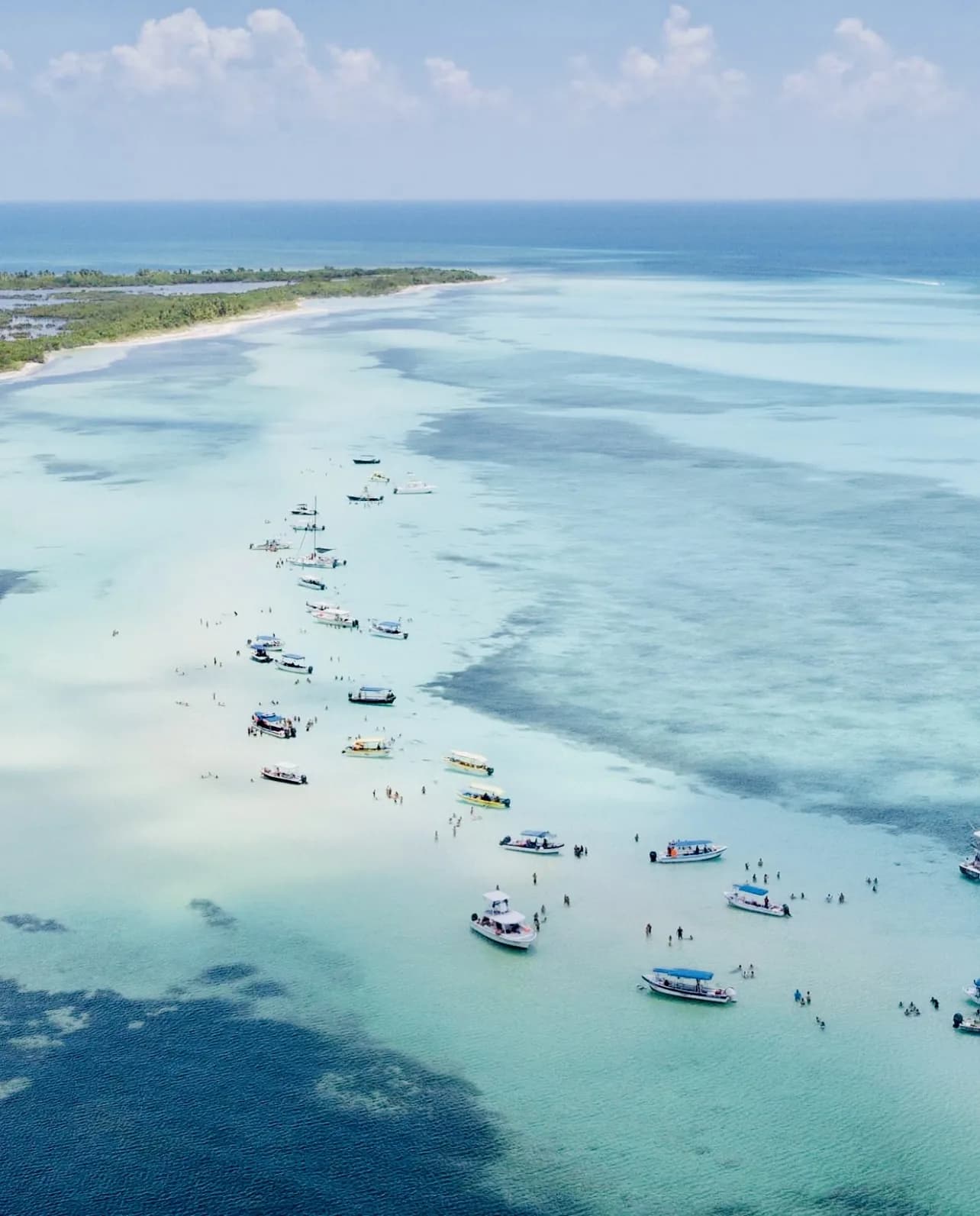
At the El Cielo sandbar, the shallow turquoise water does most of the work for you. Hold your camera half above and half below the surface for the split shots that show up in every Cozumel photo album. Remember that starfish are protected and must not be touched or lifted for a picture, no matter how many examples you have seen online.
What should you leave on the ship?
Jewelry, especially rings and bracelets, is easy to lose when you pull off wet fins and vests. Expensive sunglasses tend to end up overboard. A full-size towel from your cabin is heavier than a pool towel and takes longer to dry. Water shoes are unnecessary on a boat tour, since you enter the water from the boat and never walk on rocks or coral.
Snacks are rarely needed on a four-hour trip, and food on the boat attracts gulls and sits uneasily with a moving deck. Eat a solid breakfast on the ship, drink water, and plan on lunch when you get back to the pier. Large bags of any kind are an inconvenience on a crowded boat deck. If it does not fit in a drawstring pack, it probably does not need to come.
Finally, leave the stress behind. The crew has fitted thousands of masks, coached thousands of nervous first-timers, and answered the GoPro question more times than they can count. Show up with a rash guard, reef-safe sunscreen, your ship card, and a willingness to put your face in the water, and the reef will handle the rest.
Packing for a snorkeling tour comes down to a handful of items that fit in one small bag, because the equipment that matters is already on the boat. If you are planning your Cozumel port day, browse our Cozumel cruise excursions to compare snorkel trips, check what each one includes, and reserve a spot before your sailing date.