

Snorkeling Cozumel means entering a national marine park, so a few simple reef rules decide whether your visit helps or harms the coral.
Something most visitors never register: when you are snorkeling Cozumel's western reefs, you are inside a federally protected national park. Not a vaguely protected area, not a conservation zone in name only — a decreed national park with rules, wardens, a fee, and a management agency.
That changes what a good snorkel day looks like. The reef here is the reason the island has a tourism industry at all, and it is under genuine pressure from storms, disease, warming water, and sheer visitor volume. Most of the damage from snorkelers is not malice. It is people who were never told. We run Cozumel cruise tours over these reefs year-round, and the briefing below is the one worth reading before you arrive.
What Is the Marine Park You Are Snorkeling In?
The reefs off the island's southwest coast sit inside Parque Nacional Arrecifes de Cozumel, declared a national park in 1996 and managed by Mexico's national protected areas commission, CONANP. That designation covers the famous names — Palancar, Columbia, Paraíso, Santa Rosa — and the shallow flats at El Cielo.
Those reefs are the northern end of the Mesoamerican Barrier Reef System, which runs down the Yucatán coast past Belize and Guatemala to Honduras. It is the largest barrier reef system in the Atlantic, and Cozumel's section is among its healthiest and most visited stretches.
Protected status brings concrete requirements. Visitors enter through authorized operators, there is a park admission fee collected per person, and specific activities are prohibited rather than discouraged. Wardens do patrol, and operators who break the rules risk their permits.
Why the enforcement has sharpened in recent years is worth knowing. Caribbean reefs, Cozumel included, have been hit by stony coral tissue loss disease, which spreads between colonies and has killed significant amounts of hard coral across the region. Hurricanes do episodic structural damage. Warming water drives bleaching events. A reef already under that load has very little tolerance left for avoidable physical damage from visitors.
Which Sunscreen Is Allowed When Snorkeling Cozumel?
This is the rule most often broken, and the one easiest to get right before you leave home.
Conventional sunscreens contain UV-filtering chemicals that wash off in the water. Oxybenzone and octinoxate are the two most commonly restricted, both associated in research with harm to coral, and they are the reason biodegradable sunscreen requirements exist across the Riviera Maya. Chankanaab and the eco-parks on the mainland enforce this at the gate, and park operators will ask you about it.
Three practical approaches, in order of how well they work:
- Wear a rash guard. A long-sleeved swim shirt covers the area that needs the most protection — your back and shoulders, which face the sun for the entire snorkel — and puts nothing in the water. This is the single best answer and it costs less than a bottle of good sunscreen.
- Use a mineral sunscreen with non-nano zinc oxide, applied to face, hands, and the backs of your legs. Check the label rather than trusting the words "reef safe" on the front, which are not regulated.
- Apply well before you swim, at least twenty minutes, so it binds to your skin rather than rinsing straight off into the water.
Leave the spray cans and the thick waterproof lotions at the hotel. Also skip insect repellent before a snorkel — DEET washes off too.
Why You Never Touch, Stand On or Lift Anything
Coral is an animal, not a rock. Each colony is covered in a thin mucus layer that protects it from infection, and a hand, a fin, or a knee removes that layer and opens the tissue to disease. A single careless stand-up can kill a section of coral that took decades to grow.
The rules follow from that:
- Do not touch coral with anything — hands, fins, cameras, dangling gear. Secure loose straps before you get in.
- Do not stand on the reef. If you need a rest, signal the guide or go back to the boat. There is always a float available.
- Do not take anything. Shells, coral fragments, sand, and sea fans all stay. Removing them is prohibited, and live shells are animals or someone's home.
- Do not feed the fish. Feeding changes behavior, concentrates aggressive species, and alters the grazing that keeps algae off the coral.
There is a selfish reason too. Fire coral stings, and it looks like unremarkable brown-gold branching coral until you brush it. The burning lasts for hours. Keeping your hands to yourself protects you as well as the reef.
Fin control is the skill nobody teaches. Kick from the hip with slow, shallow movements rather than bicycling your knees, and keep yourself horizontal. Most accidental reef contact happens when someone tilts upright to adjust a mask and their fins swing down into the coral.
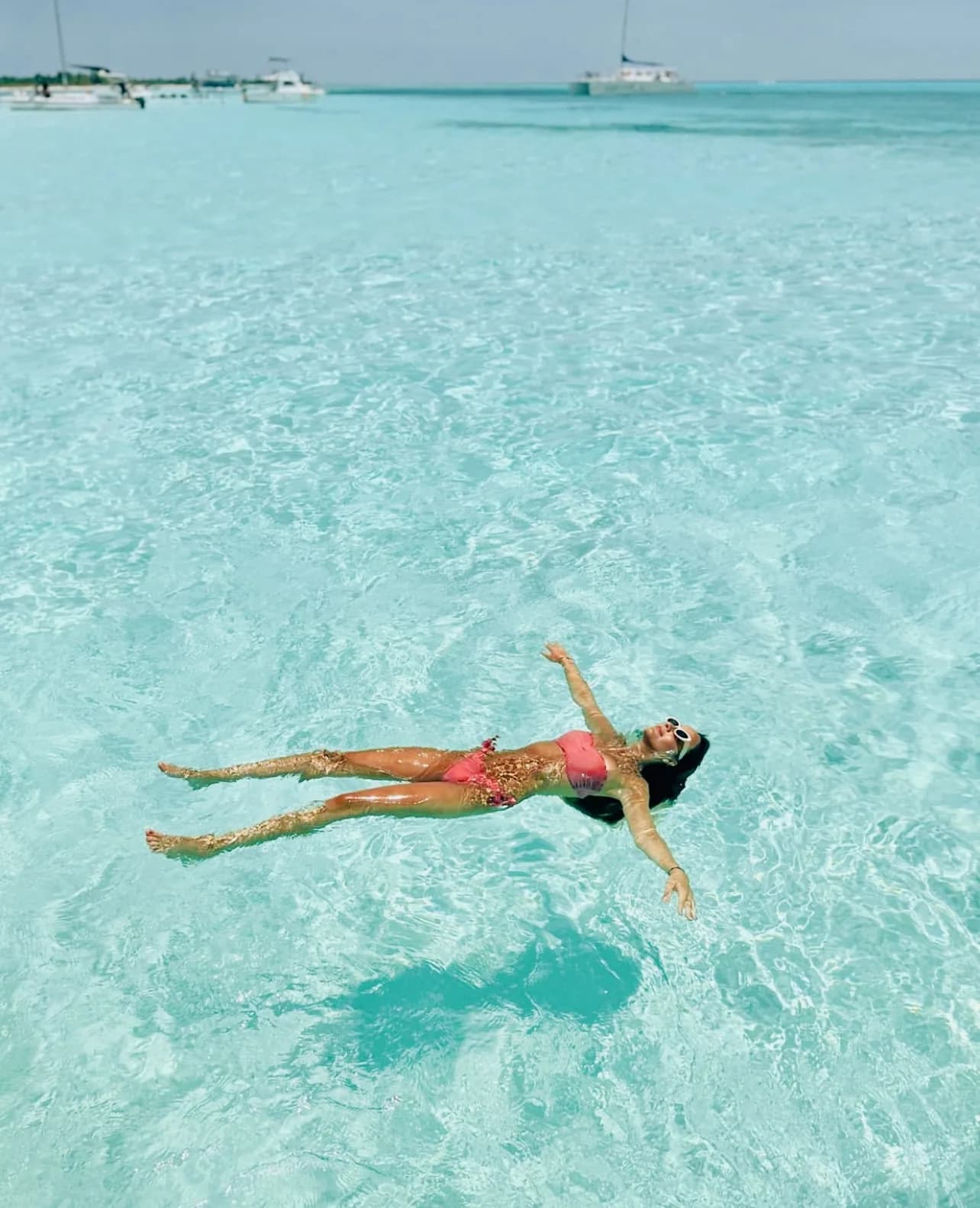
If you need to stop and sort out a mask or a cramp, roll onto your back and float. Your vest holds you with no effort, nothing of yours touches anything, and a guide can reach you. It takes a few seconds and it is the single habit that prevents the most damage.
Where You Swim Matters as Much as What You Touch
Two sites get the heaviest snorkeler traffic, and each has its own failure mode.
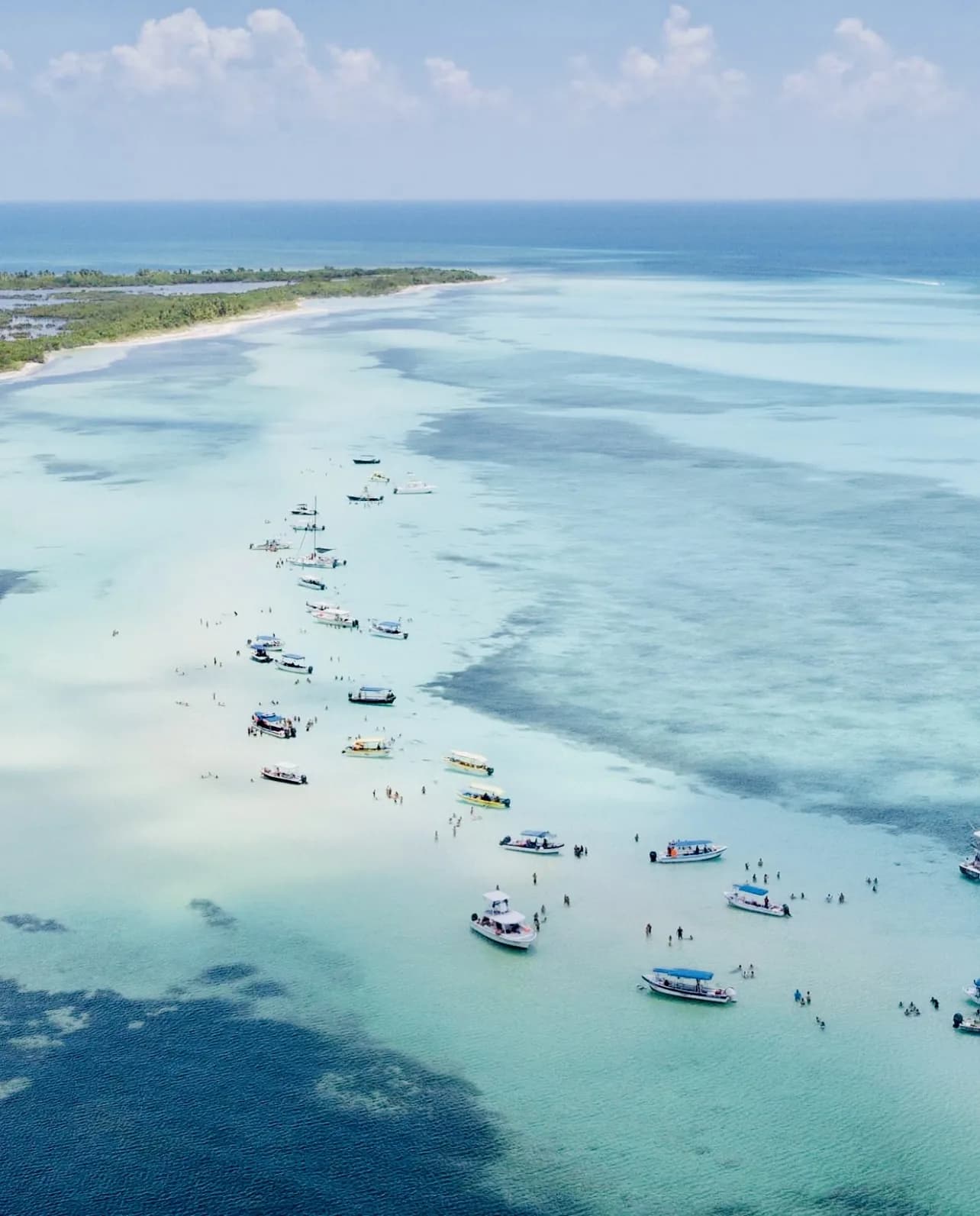
On the shallow flats at El Cielo, the problem is standing. The water is waist-deep in places, which makes standing feel natural, and the sandbar bottom tolerates it better than coral does. But the sand is not empty — it holds seagrass, conch, and the starfish people come to see. Keep your fins and feet off the bottom wherever you can see life on it, and never shuffle along where you cannot see what is underneath.
On the reef walls at Palancar, Columbia, and Santa Rosa, the problem is current. These are drift sites: you move with the water rather than against it, which means you cannot stop precisely where you want to. Plan your line early, stay above the reef crest rather than alongside it, and give yourself vertical clearance. Three feet of water between you and the coral absorbs any mistake.
Groups cause damage that individuals do not. When twenty people bunch up over one coral head to photograph the same fish, somebody gets pushed into it. Spread out, hang back, and wait your turn — the fish is not going anywhere, and the reef will still be there in thirty seconds.
How Close Can You Get to Turtles and Rays?
Cozumel's green and hawksbill turtles are the encounter people remember, and they are also where good intentions do the most harm.
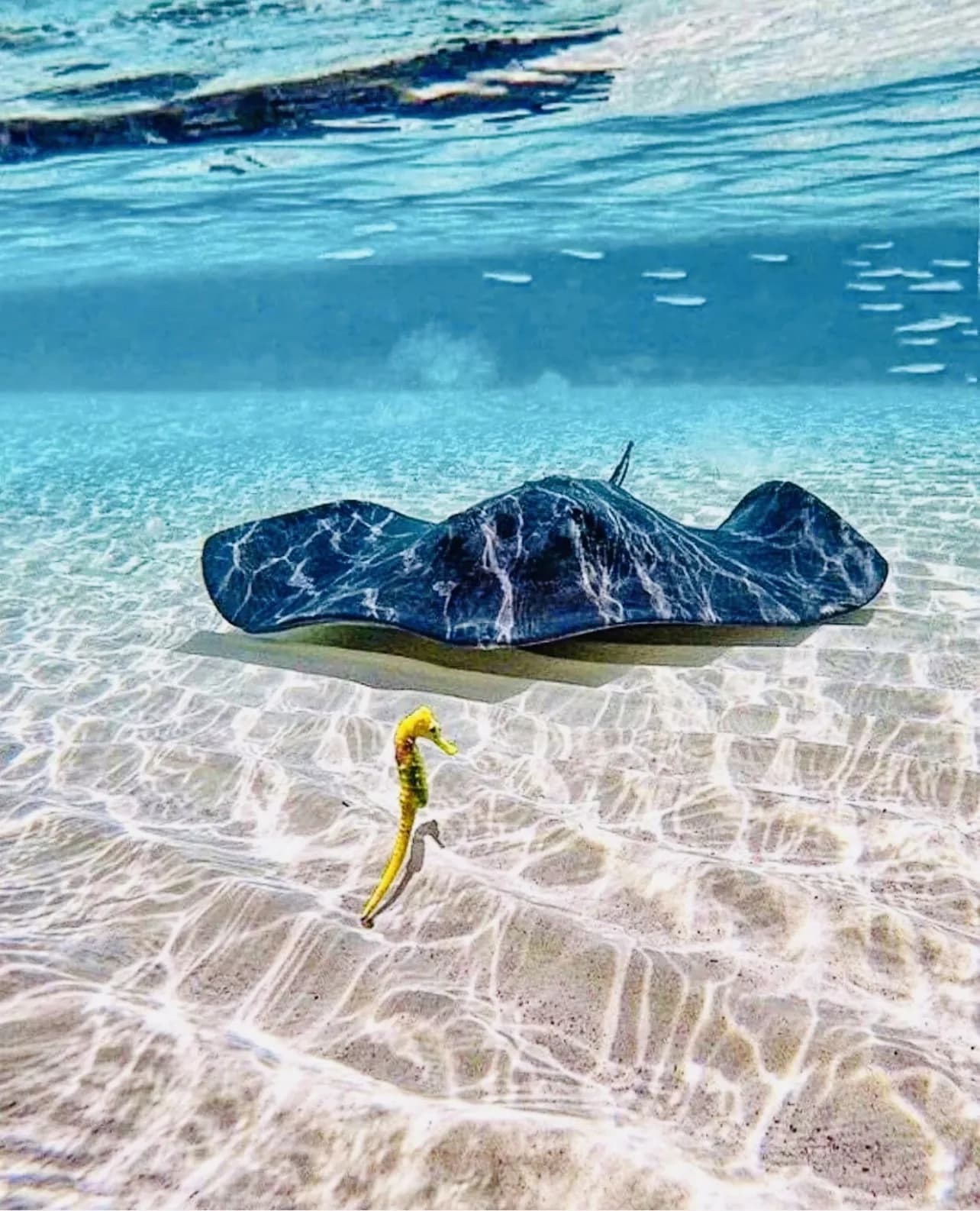
Give them space and let the animal set the distance. A turtle that is feeding on seagrass or resting under a ledge will usually tolerate a calm snorkeler watching from several feet away. One that is chased will burn energy fleeing and will leave the area.
The specifics: do not touch, ride, or hold a turtle, do not block its path to the surface — turtles breathe air, and a ring of snorkelers above one is genuinely dangerous — and do not use flash photography. The same applies to rays, nurse sharks, and eels. Watch, do not pursue.
At El Cielo, the starfish rule deserves its own sentence. Lifting a starfish out of the water to photograph it harms the animal, because air enters its water vascular system. Park rules prohibit it and guides will stop you. Photograph it where it lies, which looks better anyway.
If you want a sense of how the reef fits alongside the rest of the island, our overview of things to do in Cozumel covers the mix of reef, beach, and inland options for a single port day.
What Does the Park Fee Pay For?
Visitors sometimes read the park fee as another add-on charge. It funds the thing you came to see.
Park revenue supports the warden patrols that stop illegal fishing and anchoring, mooring buoys that let boats tie up instead of dropping anchor into coral, monitoring programs that track reef health and disease spread, and the permit system that caps how many operators work each site. Reefs with that infrastructure hold up measurably better than reefs without it.
Choosing an authorized operator matters for the same reason. Permitted boats use the mooring buoys, follow site rotation so no single reef takes all the traffic, carry guides trained in park rules, and brief guests properly. Unpermitted boats do none of that and anchor wherever is convenient.
A few things you can check:
- Does the operator hold a marine park permit, and is the fee included or collected separately?
- Does the boat use mooring buoys rather than anchoring?
- Is there a reef briefing before you enter the water?
- Does the guide stay in the water with the group?
None of this makes the day harder. It is a shirt instead of a lotion, hands at your sides, and fins behind you rather than beneath you. Snorkeling Cozumel responsibly costs you nothing and is the difference between a reef that is still worth visiting in twenty years and one that is not.
The whole list fits on a napkin: rash guard instead of sunscreen, nothing touched, nothing taken, nothing fed, no animal chased, no starfish lifted, and a permitted boat on a mooring. Seven things. Every guide on the island will tell you the same seven, and the visitors who follow them have a better day anyway — you see more when you are floating still and watching than when you are reaching.
Every trip we run is permitted, briefed, and moored rather than anchored, and our guides are in the water with you. Have a look through our snorkeling trips and ask us anything about park rules before you book — with Cozumel Cruise Tours a proper reef briefing comes as part of the day, not as an afterthought, so snorkeling Cozumel's reefs leaves them exactly as you found them.